* All product/brand names, logos, and trademarks are property of their respective owners.
A Glimpse into Toyota’s Future SUV Design? Toyota has long dominated the family SUV segment with vehicles like the Highlander and Fortuner — known for their reliability, practicality, and comfort. But what happens when the world's most dependable car brand dares to look a little futuristic?
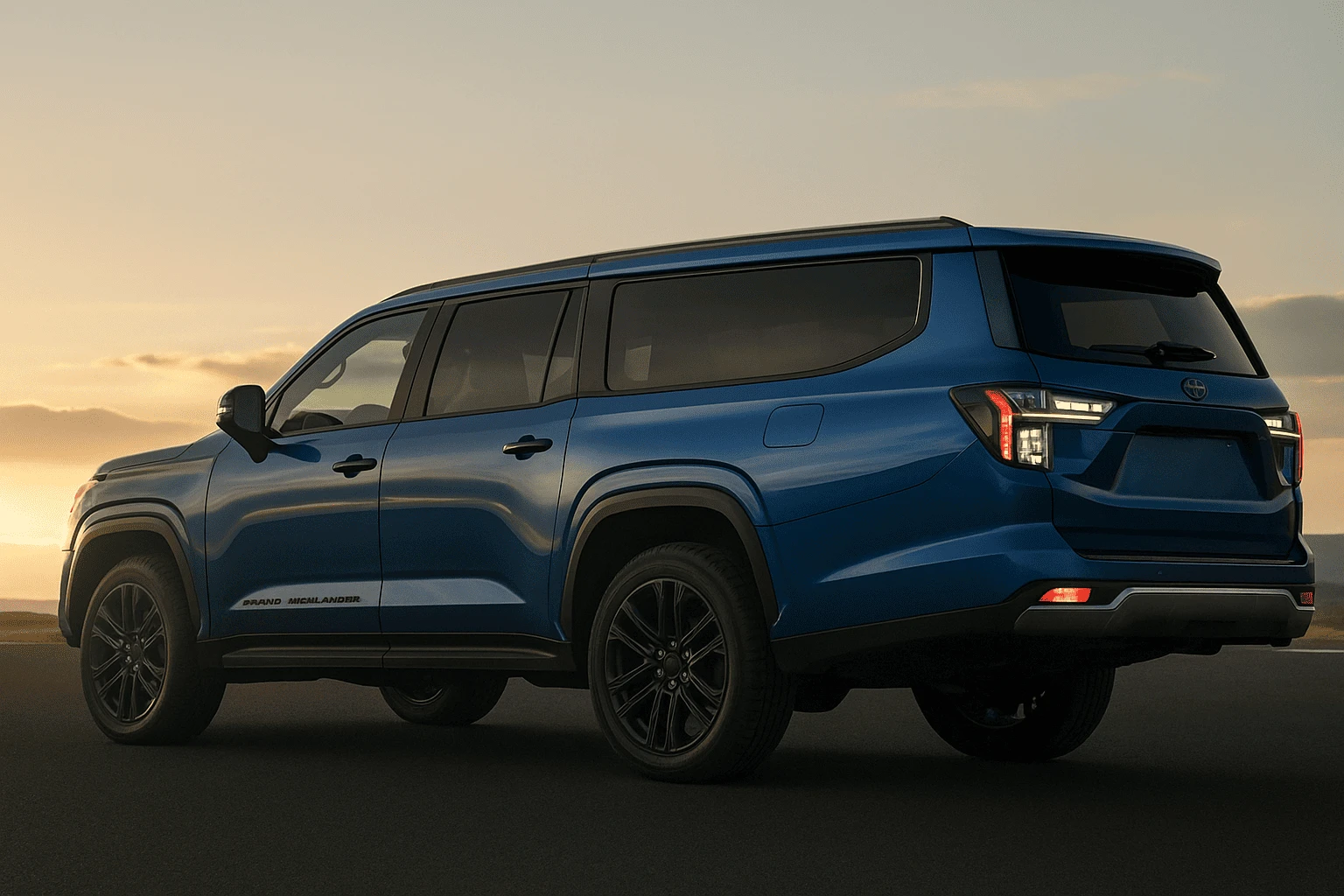
That’s exactly the question buzzing around online after a striking new CGI render of the Toyota Grand Highlander went viral. Created by digital artist Dimas Ramadhan, aka Digimods DESIGN, this speculative 2027 model envisions a bold mid-cycle refresh — and it’s nothing like the conservative designs we’ve come to expect.
The 2026 Toyota Grand Highlander, unveiled recently by Toyota Motor North America (TMNA), is already a strong contender in the premium three-row SUV segment. Built with large families in mind, it offers spacious interiors, strong hybrid powertrains, and refined comfort. But Ramadhan’s render takes things to a whole new level, showcasing aggressive styling, a futuristic split-headlight setup, and sleek teardrop-style taillights — turning this family hauler into something that looks straight out of 2030.
While this CGI vision doesn’t change the mechanical underpinnings (the current Grand Highlander offers up to 362 horsepower via its Hybrid Max engine), it challenges Toyota fans and industry watchers to rethink what the brand’s design language could become.
For readers in Pakistan and South Asia, where the Grand Highlander isn’t officially available, the render still matters. Why? Because this bold design language could trickle down into future versions of locally popular models — like the Toyota Fortuner or even new hybrid imports. It’s a visual cue of where Toyota might be headed.
So, is this just digital art, or a glimpse into Toyota’s design evolution? Let’s break it down — what’s real, what’s imagined, and what this could mean for SUV lovers around the world.
The Toyota Grand Highlander may have only been introduced recently, but it’s already making waves as one of the most versatile and spacious SUVs in Toyota’s global lineup. While it shares its name with the Highlander, this model takes everything up a notch — more space, more features, and more power. Here’s why it’s quickly becoming a favorite in the premium family SUV segment.
| Feature Category | Details |
|---|---|
| Third-Row Comfort | Adult-sized third row – comfortable for long trips and full family use |
| Trim Levels | XLE, Limited, Platinum |
| Interior Features | Heated & ventilated seats, panoramic sunroof, 12.3-inch infotainment system |
| Tech & Connectivity | Apple CarPlay, Android Auto, hands-free power liftgate |
| Cargo Space | Up to 97.5 cubic feet with rear seats folded |
Unlike many midsize SUVs that struggle to fit adults in the third row comfortably, the Grand Highlander was purpose-built to offer true three-row usability. Whether you’re planning a road trip with friends or hauling the entire family across town, the Grand Highlander’s adult-sized third-row seating stands out.
Available in several trims — including XLE, Limited, and the high-end Platinum — the SUV comes loaded with comfort features such as heated and ventilated seats, a panoramic sunroof, and a 12.3-inch touchscreen infotainment system with Apple CarPlay and Android Auto. There’s also a hands-free power liftgate, which makes it ideal for busy parents or anyone who’s always on the go.
Add in up to 97.5 cubic feet of cargo space (with the rear seats folded), and it’s clear that Toyota designed this SUV to be as practical as it is premium.
| Powertrain | Engine Details | Performance | Best For |
|---|---|---|---|
| Gas (Base Model) | 2.4L Turbocharged 4‑Cylinder | 265 hp | Everyday driving |
| Hybrid | 2.5L Hybrid System | Balanced performance + fuel economy | Fuel-conscious families |
| Hybrid Max | 2.4L Turbo + Electric Motor | 362 hp / 400 lb‑ft torque | Power + eco-efficiency combined |
Toyota offers the Grand Highlander with three different powertrain options, making it a versatile choice for a wide range of drivers. There’s the base 2.4-liter turbocharged four-cylinder engine that delivers 265 horsepower — powerful enough for everyday driving. Then comes the 2.5-liter hybrid, ideal for those prioritizing fuel efficiency without sacrificing performance.
But the real star of the lineup is the Hybrid Max system, which delivers a whopping 362 horsepower and 400 lb-ft of torque, offering an impressive balance of power and eco-consciousness. Despite its size, the Grand Highlander still manages strong fuel economy figures — a big plus for long-distance travelers or growing families.
Whether you’re drawn to its spacious cabin or its impressive hybrid performance, the Toyota Grand Highlander proves that utility and luxury don’t have to be mutually exclusive.
While the production version of the Grand Highlander leans into practicality and luxury, a digital rendering by CGI artist Dimas Ramadhan (Digimods DESIGN) has captured the internet’s imagination by pushing Toyota’s styling in a bold, futuristic direction. Shared across social media and auto forums, the concept has quickly gone viral — and for good reason.
The most eye-catching detail of this concept? A split-headlight design that instantly sets it apart from current Toyota models. Gone is the traditional headlight layout — instead, the render introduces a slim LED bar sweeping across the upper fascia, positioned just under the hood line. Below it, the main headlight clusters are integrated into the bumper for a more dramatic and aggressive look.
The grille, while maintaining its familiar trapezoidal shape, now features a sportier honeycomb insert, replacing the simpler design seen on the production version. A notable omission is the small radiator grille that sits between the lights in the real Grand Highlander — likely a nod toward the future of electrified SUVs, where grille size may become less relevant.
Around the back, the artist swaps the C-shaped taillights for teardrop-style LED units that extend into the bodywork. Add in sleek multi-spoke alloy wheels and revised bumper contours, and this speculative 2027 Grand Highlander looks like something straight out of a concept car show.
While it’s just a render, this design isn’t just eye candy. It reflects a broader trend in SUV design — one that blends aggressive styling with clean, minimalist lines and high-tech lighting elements.
Automakers across the globe — from Hyundai to BMW — are embracing more daring, futuristic designs as consumer tastes evolve. With the popularity of EVs and the increasing demand for tech-laden, visually striking vehicles, Toyota may very well follow suit.
If this CGI version of the Grand Highlander hints at what’s to come, we could be witnessing the early visual DNA of Toyota’s next generation of SUVs — not just in North America, but possibly in global markets as well.
Although the Toyota Grand Highlander is primarily built for the North American market, its bold presence and practical appeal have piqued the interest of car lovers around the globe — including in Pakistan and across South Asia. Even though it’s unlikely to be officially launched in this region anytime soon, it still raises important questions about what the future of Toyota’s SUV design could mean for local buyers.
In Pakistan, the demand for spacious, durable, and comfortable SUVs has been growing rapidly — particularly among families and high-income individuals who prioritize utility and road presence. Models like the Toyota Fortuner, Kia Sorento, and Hyundai Santa Fe have seen significant success due to their ability to handle city traffic, highway journeys, and even rougher terrain outside urban centers.
Imported vehicles — especially CBUs (Completely Built Units) — continue to attract attention from car enthusiasts looking for unique features, hybrid tech, or luxury specs not available in locally assembled models. While the Grand Highlander isn’t currently sold through official Toyota Indus Motor Company (IMC) channels, private imports and grey-market interest remain strong for high-end SUVs.
With its three-row layout, premium interior, and hybrid powertrains, the Grand Highlander ticks many boxes that Pakistani buyers care about — even if price and import duties put it out of reach for most.
The CGI version of the Grand Highlander, with its split-headlight setup and teardrop taillights, represents a bold shift from traditional SUV design. While Pakistani consumers typically lean toward rugged, masculine aesthetics — think Prado or Fortuner — younger buyers and urban elites are showing more interest in futuristic, tech-forward designs.
If Toyota adopts these design cues across its SUV lineup in the coming years, we’ll likely see elements of this bold styling trickle down to future Fortuner models, or even new hybrid crossovers. Especially as Pakistan moves slowly toward electrification and hybrid adoption, sleek and futuristic design could become a status symbol as much as a practical choice.
In short, even though the Grand Highlander might not make it here officially, its design language very well could — and that’s worth watching.
Whether you're an SUV enthusiast, a loyal Toyota fan, or simply someone who enjoys futuristic car designs, the viral CGI render of the Grand Highlander offers more than just digital eye candy — it sparks a real conversation about where the world’s biggest automaker might be headed.
The 2026 Toyota Grand Highlander is already an impressive vehicle in its own right: spacious, powerful, and family-ready, with a range of powertrain options including Toyota’s formidable Hybrid Max system. But what makes this render by Dimas Ramadhan so exciting is that it dares to imagine something bolder — a design that’s futuristic, aggressive, and unapologetically different from the Toyota we’ve known for years.
From the split-headlight layout and LED bar to the taillight redesign and minimalist fascia, every detail in the concept render points toward a growing trend in automotive design: blending form, function, and future-forward thinking. And while this specific Grand Highlander may never roll off an assembly line, it could absolutely influence the design of upcoming Toyota SUVs — including models more relevant to regions like Pakistan, India, and the Middle East.
So, is this just another viral rendering? Or are we looking at the early signs of Toyota's next design era?
What do you think? Would you like to see the next Fortuner or Prado styled with bold, modern features like this?

I am Zeenat, an SEO Specialist and Content Writer specializing in on-page and off-page SEO to improve website visibility, user experience, and performance.
I optimize website content, meta elements, and site structure, and implement effective off-page SEO strategies, including link building and authority development. Through keyword research and performance analysis, I drive targeted organic traffic and improve search rankings.
I create high-quality, search-optimized content using data-driven, white-hat SEO practices, focused on delivering sustainable, long-term growth and improved online visibility.
Many drivers want their cars to feel quicker, smoother, and more responsive, but not everyone has th
23 May 2026
Carbon fiber mods have become one of the most popular upgrades in the world of modifications—a
7 February 2026
The BYD Shark 6 is quickly making waves in Pakistan's automotive scene and for good reason. As the c
16 September 2025
Be the first to share your thoughts
No comments yet. Be the first to comment!
Share your thoughts and join the discussion below.