* All product/brand names, logos, and trademarks are property of their respective owners.
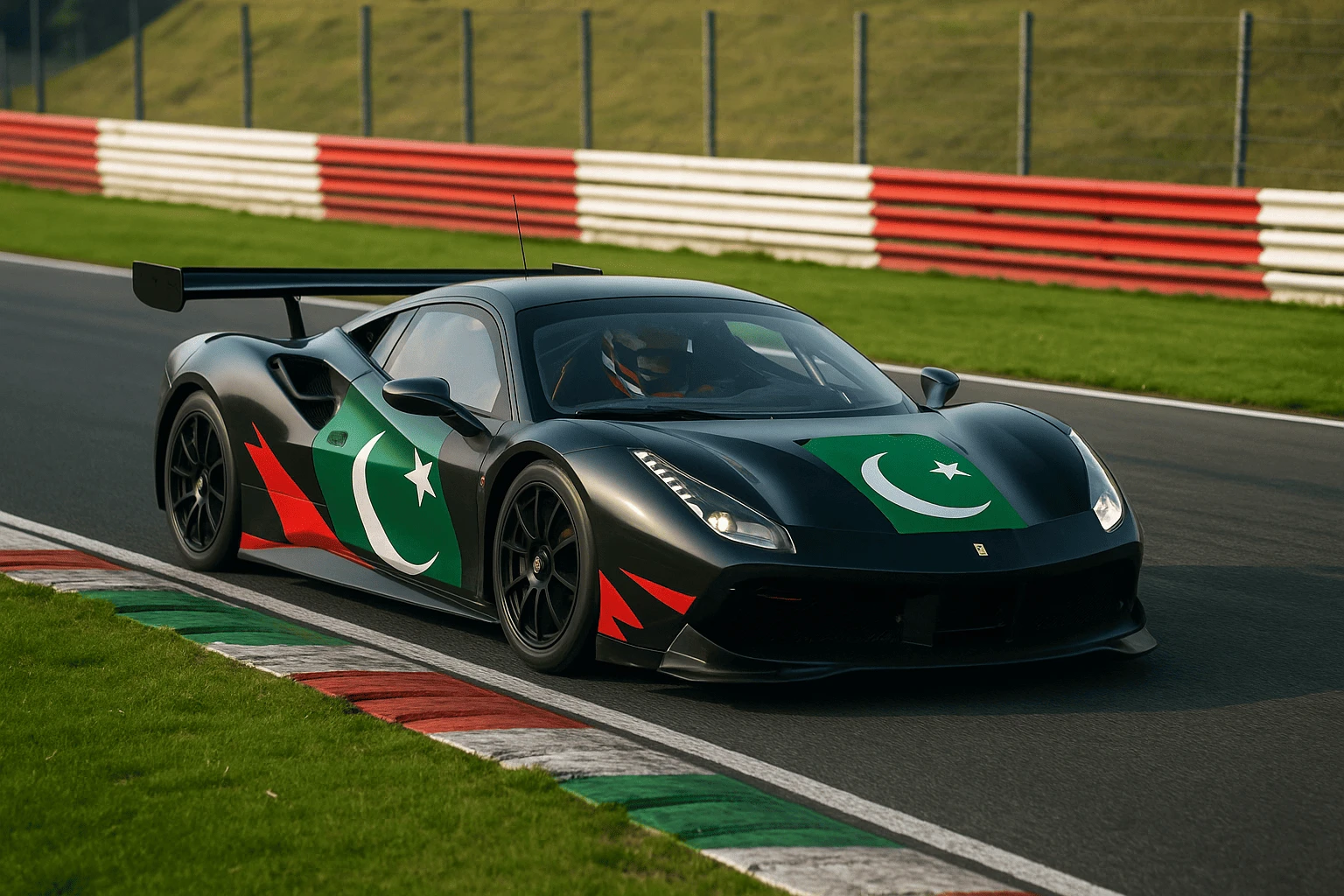
Over the past few years, something unexpected has been roaring to life in the deserts, cities, and mountains of Pakistan — the country's motorsports scene. Once seen as a niche interest limited to a handful of off-road enthusiasts and dusty desert rallies, Pakistan’s motorsports culture is now accelerating into the spotlight, gaining the kind of international attention few could have imagined a decade ago.
From the iconic Cholistan Jeep Rally that winds through the golden sands of Punjab, to urban drag races lighting up the streets of Islamabad and Karachi, there’s a surge of energy and ambition driving this shift. It's not just about fast cars and rough terrain — it's about a rising motorsport scene that’s evolving into a symbol of national pride, cultural expression, and economic potential.
What’s fueling this momentum? A mix of factors: growing youth interest, stronger media coverage, better-organized events, and a wave of fresh talent entering the racing world. International rally drivers, automotive journalists, and sponsors are beginning to take notice — especially as Pakistani events become more structured and accessible.
But this rise didn't happen overnight. It’s the result of years of grassroots passion, community building, and the determination of motorsport lovers who never gave up — even when resources were limited or mainstream interest was non-existent.
In this blog, we’ll explore the journey of Pakistan’s motorsports evolution — from its dusty desert roots to its current moment on the global radar. We’ll break down key events, rising trends, untold stories, and the exciting potential that lies ahead.
Buckle up — the road is just getting started.
The origins of motorsports in Pakistan can be traced back to the raw and rugged landscapes of southern Punjab and Balochistan. Here, in the heart of the desert, began what would eventually grow into one of the country’s most iconic motorsport traditions: the Cholistan Desert Jeep Rally.
Launched in 2005, this event was initially organized to promote tourism and highlight the rich cultural heritage of the Cholistan region. But it quickly became much more than that. Drawing in adrenaline junkies, professional drivers, and 4x4 enthusiasts from across the country, the rally transformed into an annual celebration of speed, endurance, and community. With over 200 participants and thousands of spectators, the Cholistan Rally set the tone for what Pakistan’s motorsport culture could be — exciting, inclusive, and deeply rooted in the local environment.
Not far behind was the Jhal Magsi Desert Challenge in Balochistan, another off-road adventure that pushed both man and machine to the limit. These early events may have lacked international media coverage or big sponsorships, but they were rich in passion and local pride. They laid the foundation for what would eventually become a nationwide motorsport movement.
What started in the deserts didn’t stay in the deserts.
Motorsport events began popping up in other parts of the country — each with its own unique flair. From hill climbs in northern Pakistan to mud track races in Sindh and night drags in Islamabad, regional events created space for diverse communities to participate. These weren’t just races; they were festivals — complete with local food, music, and family gatherings.
Local motorsport clubs and associations started to form, such as the Motorsport Association of Pakistan (MAP). These groups helped standardize rules, improve safety, and connect regional events under a broader national banner. Over time, the sense of fragmentation faded and a more organized, connected motorsport scene began to emerge.
This era also saw increased involvement from younger drivers, women participants, and car customizers — adding new layers of diversity and creativity to the scene. As social media platforms like Instagram, TikTok, and YouTube flourished, so did the visibility of these regional events. Rally highlights, behind-the-scenes content, and driver profiles began attracting fans far beyond Pakistan’s borders.
Flagship events like the Cholistan Jeep Rally and the Jhal Magsi Desert Challenge have evolved from domestic spectacles into internationally recognized motorsport festivals. They now attract coverage from international media, foreign participants, and automotive influencers worldwide.
This year’s Cholistan Rally broke records — not just in terms of participation, but also in audience reach. International YouTube vloggers, automotive journalists, and content creators traveled to document the event, sharing the unique thrill of Pakistan’s desert racing culture with millions online. Foreign racers and tourists are also beginning to take part, drawn by the adventure, the rugged beauty of the terrain, and the strong sense of hospitality.
These events are also getting more professional. Sponsorships from major auto brands, digital ticketing, safety improvements, and better infrastructure have all helped elevate the image of motorsports in Pakistan. This growth is turning local racers into national celebrities — and in some cases, even global ambassadors for Pakistan’s motorsport culture.
Another key driver of this global attention is the digital generation of motorsport fans and content creators. In cities like Karachi, Lahore, and Islamabad, the motorsport culture is moving beyond rallies and into urban streets. Drifting clubs, drag racing events, and tuning expos are being organized by enthusiasts — often documented with slick production and shared widely across platforms like TikTok, Instagram Reels, and YouTube Shorts.
These videos often go viral — not just locally, but internationally. Short clips of customized Hilux trucks flying across dunes, or modified Civics doing burnouts at organized night races, show a side of Pakistan that defies stereotypes. It’s fresh, exciting, and completely different from mainstream perceptions of the country.
Moreover, the youth-driven energy behind this trend is impossible to ignore. Young Pakistanis are not just attending events — they’re creating them. They’re forming auto clubs, launching podcasts, managing social pages, and even building sponsorship deals. In a country where over 60% of the population is under 30, this surge of grassroots activity has the potential to sustain and grow the motorsport scene far into the future.
While the momentum is real, Pakistan’s motorsport scene still faces significant hurdles. One of the biggest challenges is infrastructure. Outside of a few major events, most races are held on improvised tracks without standardized facilities, safety barriers, or dedicated racing circuits. This lack of formal structure limits both the safety and scalability of the sport.
Then there’s the issue of funding and sponsorship. While some corporate sponsors are stepping in — especially for high-profile rallies — most grassroots motorsport events rely heavily on personal funds or small local businesses. This limits the reach and professionalism of many promising initiatives. Without sustained financial support, many young racers and organizers struggle to keep their motorsport dreams alive.
Another major opportunity — and challenge — is diversity. While participation among young men is growing rapidly, women racers and mechanics remain vastly underrepresented. Cultural barriers, safety concerns, and lack of support often keep women on the sidelines, despite growing interest. But the potential is there — and slowly, barriers are being challenged. Featuring women in motorsports not only promotes inclusivity but also adds a new dimension to the sport’s public appeal and growth.
With international eyes on Pakistan’s rising motorsport culture, the next big question is: Can the country host large-scale, globally recognized motorsport events? The potential certainly exists.
Pakistan has the natural terrain, an enthusiastic fan base, and a growing number of skilled drivers. With better investment in racetrack infrastructure, improved safety standards, and government or private sector backing, there’s no reason why international competitions — like cross-country rally championships or off-road circuits — couldn’t be hosted here.
Organizations like the Motorsport Association of Pakistan (MAP) are already working to secure official affiliations and build international links. In 2025, Pakistan hosted its first exhibition race with participants from the Middle East and Europe. While small, this marked an important step toward international legitimacy.
Additionally, there’s a huge opportunity to tie motorsports with tourism and national branding. Imagine motorsport-focused travel packages that allow international visitors to attend a desert rally, explore local culture, and experience Pakistan’s hospitality — all in one trip. This could open the door to a powerful, untapped tourism niche.
Pakistan’s motorsports scene is no longer a hidden gem — it’s a movement accelerating toward global recognition. From its humble beginnings in the deserts of Cholistan and Balochistan to the bustling energy of urban drag races and digital content, the country’s passion for speed and performance is finally getting the spotlight it deserves.
But this rise didn’t happen by chance. It’s the result of passionate individuals, bold organizers, creative youth, and supportive communities who believed in the dream — even when there were no tracks, sponsors, or headlines.
Now, the road ahead looks brighter than ever.
Yes, challenges remain: infrastructure needs investment, diversity needs nurturing, and consistency must be built. But the opportunities are massive — not just for motorsport fans, but for Pakistan’s tourism, economy, and international reputation.
So, whether you're a long-time motorsport lover, a curious outsider, or someone just discovering this rising scene, now is the time to pay attention.
Pakistan’s engines are roaring — and the world is finally listening.
Follow the drivers. Share their stories. Support local events. Be part of the rise.

I am Zeenat, an SEO Specialist and Content Writer specializing in on-page and off-page SEO to improve website visibility, user experience, and performance.
I optimize website content, meta elements, and site structure, and implement effective off-page SEO strategies, including link building and authority development. Through keyword research and performance analysis, I drive targeted organic traffic and improve search rankings.
I create high-quality, search-optimized content using data-driven, white-hat SEO practices, focused on delivering sustainable, long-term growth and improved online visibility.
The Kawasaki Ninja H2 is not just another superbike. It is Kawasaki’s supercharged statement m
3 June 2026
Nissan heard the complaints loud and clear. The Z Nismo had the power, the attitude, and the sharper
22 May 2026
The 2026 World Rally Championship isn’t just another season — it’s the closing cha
24 February 2026
Be the first to share your thoughts
No comments yet. Be the first to comment!
Share your thoughts and join the discussion below.