* All product/brand names, logos, and trademarks are property of their respective owners.
Lahore's ride-hailing companies have been told to hand over driver records for police verification and add dashcams, tracking devices and QR-based panic buttons to their vehicles. The direction matters to passengers and drivers, but it does not mean every car or bike on an app will change overnight.
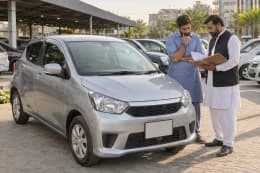
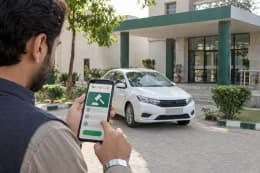
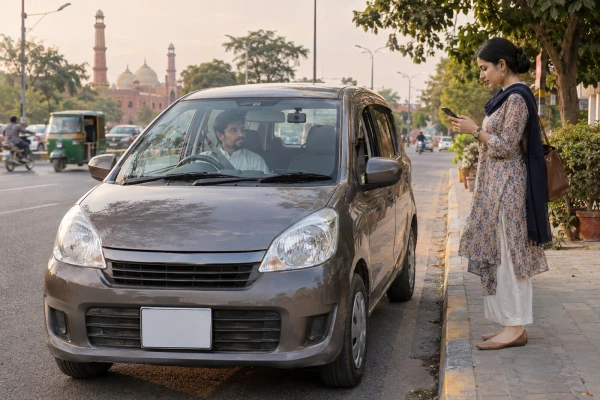
The immediate takeaway is simpler: book through the official app, check that the arriving driver and vehicle match the screen, keep the trip digitally active and use the platform's reporting tools if anything is wrong. Those steps are already part of Punjab's notified safety protocol, while the latest Lahore police move is aimed at tighter verification and enforcement.

According to Dawn's report on the CTO's meeting with ride-hailing companies, operators were directed to submit complete driver records to Lahore traffic police. Drivers involved in serious criminal activity or carrying a criminal record would not be allowed to operate online cab services, the report said.
Companies were also instructed to install dash cameras and advanced tracking devices and to move towards the Chief Minister Punjab's QR-based panic button. The CTO warned of action against services that fail to meet mandatory safety requirements.
The scale behind the order is significant. The CTO said more than 100,000 cars, motorcycles and rickshaws in Lahore are linked with online ride-hailing. Police had checked 10,000 commercial drivers and found criminal records associated with 2,050 of them, involving 3,700 cases. These are police figures reported after the meeting; they are not a claim that one in five of every ride-hailing driver in Lahore has a criminal record, because the checked group was described more broadly as commercial drivers and may not represent the full platform workforce.
The new Lahore direction sits alongside an earlier provincial framework. The Punjab Transport Authority's TNC regulation page says ride-hailing companies require a licence, must share live driver and vehicle data with the authority, and are subject to passenger-safety requirements.
Punjab's notified TNC safety and security protocols, dated 19 February 2026, spell out the everyday checks more clearly. Passengers should book only in the official app, verify the vehicle and driver shown on screen, reject mismatched or offline rides, keep the trip digitally activated, share live trip details and report harassment, rash driving or an unauthorised route change in the app.
The same notification says companies should provide an in-app SOS feature linked to local emergency services. It also states that drivers should complete onboarding and background verification, hold the required licence and permits, and use a registered, insured and fitness-certified vehicle.
For drivers considering their own camera, Auto Dost's guide to choosing a dashcam in Pakistan explains the useful hardware features. Our overview of vehicle tracking technology also covers how modern systems record location and movement. Any installation used for commercial compliance should still follow the platform's instructions and applicable privacy requirements rather than relying on a consumer accessory alone.
The public reports do not provide a compliance deadline, approved device specification, installation standard or a published penalty schedule for the newly emphasised dashcam, tracker and QR-button measures. They also do not say who will pay for the hardware. Drivers should therefore wait for written instructions from their platform or the competent authority before buying equipment marketed as "approved".
That distinction is important. The police direction is a real enforcement development, while several practical details remain unpublished. Passengers can act on the verified safety steps today; drivers and fleet owners should seek documented platform guidance before spending money.

Hi, I’m Ahmed, a professional content writer and SEO specialist. I help businesses, brands, and websites create clear, engaging, and search-friendly content that attracts the right audience and drives results.
With a strong understanding of SEO, keyword research, blog writing, website content, and content strategy, I craft content that is not only well-written but also optimized to perform on search engines. My goal is to turn ideas into powerful words that build trust, improve visibility, and support business growth.
Whether you need blog posts, website copy, product descriptions, SEO articles, or content optimization, I can help create content that connects with readers and supports your online goals.
Peshawar's newest BRT connection starts carrying passengers today, 16 November 2026. Route DR-17 run
16 November 2026
Pakistan's petrol-relief programme has entered a more uncertain phase, but it has not disappeared ov
16 November 2026
Petrol now costs PKR 330 per litre in Pakistan from 00:00 on 14 November 2026, after a PKR 2 cut. Hi
14 November 2026
Be the first to share your thoughts
No comments yet. Be the first to comment!
Share your thoughts and join the discussion below.