* All product/brand names, logos, and trademarks are property of their respective owners.
Electric vehicles (EVs) are no longer just a futuristic concept — they’re here, and China is leading the charge. As the world’s largest automotive market, China has rapidly shifted gears from traditional internal combustion engines to clean, electric mobility. With EVs now making up over 25% of new car sales in China, the country has firmly positioned itself as the global powerhouse in electric vehicle innovation and production.
But what does this mean for Pakistan?
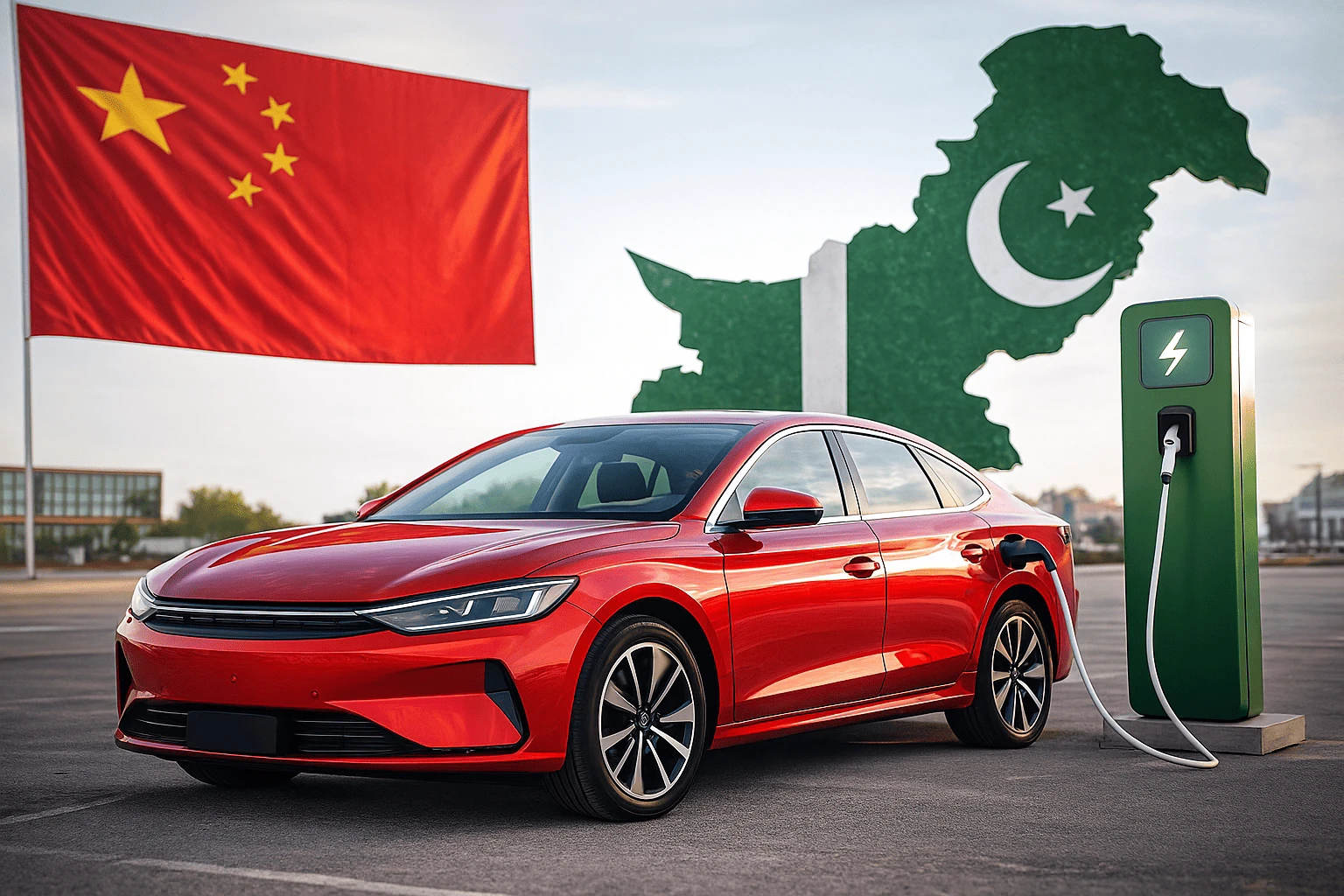
Thanks to deep-rooted strategic ties and ongoing economic collaboration under the China-Pakistan Economic Corridor (CPEC), China’s EV revolution is beginning to reshape Pakistan’s automotive landscape in profound ways. From the entry of major Chinese EV brands to joint manufacturing ventures and a rise in two-wheeler electric vehicles, the local auto industry is experiencing a major transformation — one that could alter how Pakistanis commute, invest, and think about the future of mobility.
We’ll explore together the speed and scale of China’s EV leadership, examine the influx of Chinese automakers into the Pakistani market, and unpack the economic, technological, and policy-level changes underway. Whether you're a car enthusiast, policymaker, or everyday driver curious about what’s next, this is your comprehensive guide to the EV-driven shift currently transforming Pakistan’s auto sector.
As the automotive world pivots towards electric mobility, China has emerged not just as a participant but as the undisputed leader. The country’s EV sector has undergone a dramatic transformation over the last decade, turning it into a global model of speed, scale, and innovation.
According to the Roland Berger 14th Automotive Disruption Radar, China scored a leading 87 out of 130 points — well ahead of advanced markets like South Korea (83) and the Netherlands (78). This reflects how deeply integrated EVs have become in China’s automotive system.
One of the most striking figures is the battery electric vehicle (BEV) market share:
In China, 25% of all vehicle sales are fully electric.
In Europe, that figure stands at just 12%, with signs of stagnation.
Even more impressively, 95% of Chinese consumers say they would consider purchasing an EV, highlighting a significant cultural shift towards cleaner, tech-forward transportation. This level of acceptance reflects the massive investments in both consumer incentives and public infrastructure — areas where many other countries, including Pakistan, are still playing catch-up.
Another factor behind China’s EV dominance is its agile manufacturing and development cycle. Chinese OEMs (original equipment manufacturers) like BYD, NIO, and XPeng can bring new models to market in just 24–40 months — nearly twice as fast as their European rivals, who typically take 48–60 months.
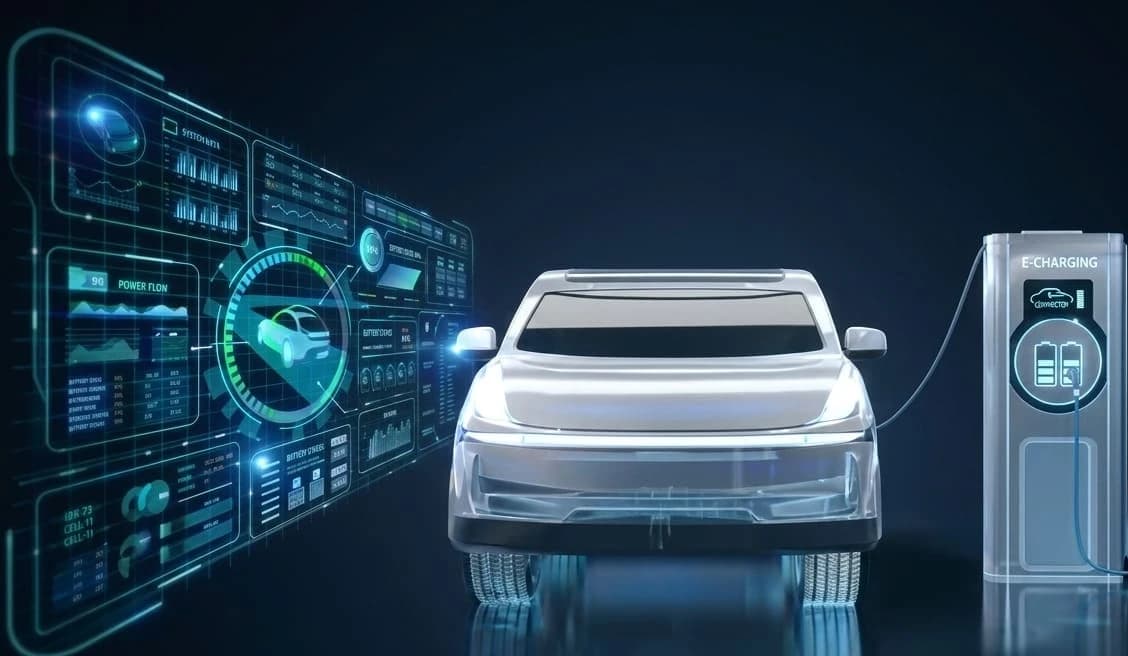
In parallel, China has rapidly scaled up its EV charging infrastructure, with dense networks of fast-charging stations even in second- and third-tier cities. The integration of AI-powered driver assistance systems, over-the-air software updates, and user-friendly interfaces has positioned Chinese EVs as some of the most advanced and accessible in the world.
For countries like Pakistan — watching closely and partnering economically — China’s EV surge provides both a blueprint and a pressure point. It’s not just about who builds the cars. It’s about who shapes the future of transportation.
Pakistan’s automotive industry, long dominated by Japanese giants like Toyota, Honda, and Suzuki, is undergoing a noticeable transformation — and China is the key driver behind this change. With its rapid EV advancements and growing focus on export markets, China is bringing its electric revolution directly to Pakistan’s roads.
In the past few years, multiple Chinese EV brands have entered the Pakistani market, often through joint ventures with local companies. These partnerships allow them to set up local assembly units, reduce costs, and cater to the unique needs of Pakistani consumers.
Key players include:
MG (Morris Garages) – Already popular in urban markets for its MG ZS EV.
Changan – Known for introducing affordable electric and hybrid options.
BYD – The world’s largest EV manufacturer has announced a major plan to launch three fully electric models in Pakistan by 2026, in partnership with a local group.
Chery, FAW, and JAC Motors – Actively exploring market share through both imports and local manufacturing.
Even Great Wall Motors (GWM), in collaboration with Sazgar Engineering, is launching models like the ORA 3 EV, signaling strong intent from Chinese automakers to build long-term roots in Pakistan.
This influx of competition is challenging the traditional players who have been slow to innovate or introduce electric models in Pakistan, giving consumers new choices — often at better price points and with modern features.
While four-wheel electric vehicles are gaining traction, the real explosion is happening in the two-wheeler segment. Brands like Yadea and Road Prince have captured attention by launching scooters with swappable battery systems — a game-changer in a country where infrastructure is still catching up.
According to reports, the Pakistani government has issued 55 out of 57 new manufacturing licenses for electric two-wheelers, highlighting the sector’s high growth potential. These affordable, low-maintenance scooters are already becoming popular in urban and semi-urban areas for delivery riders, students, and families seeking fuel-free alternatives.
By focusing on this mass-market segment, Chinese firms are accelerating EV adoption at the grassroots level — not just among elite car buyers, but across a much wider population.
China’s growing influence in Pakistan’s EV space goes far beyond just selling cars or scooters. It’s fostering deeper industrial change — bringing in foreign direct investment (FDI), creating job opportunities, and potentially repositioning Pakistan as a manufacturing and export hub in the region.
The commitment from Chinese firms is backed by serious capital. To date, over $340 million has been pledged for new EV assembly plants, charging infrastructure, and supply chain development across Pakistan. This investment aligns directly with Pakistan’s National Electric Vehicle (NEV) Policy, which aims for 30% of all new vehicle sales to be electric by 2030.
Local manufacturing doesn’t just bring down vehicle costs — it also reduces Pakistan’s import burden, helps stabilize the rupee by cutting fuel imports, and opens up space for technology transfer and skill development. Chinese companies are actively engaging in joint ventures with Pakistani partners, a strategy that enables local workforce training and long-term job creation.
More importantly, this industrial activity is breathing new life into Pakistan’s auto parts and assembly ecosystem, which had previously been stagnant. From battery modules to electronic control units and charging tech, new sub-sectors are taking shape — with Chinese firms bringing both know-how and scale.
For China, Pakistan isn’t just another sales market — it’s a strategic production and logistics hub. Due to its right-hand drive market and favorable trade access to South Asian and Middle Eastern countries, Pakistan is positioned as a launchpad for exporting Chinese EVs to neighboring markets like:
Sri Lanka
Bangladesh
Nepal
UAE and GCC countries
This export angle adds even more economic value. If executed well, Pakistan could become a regional EV manufacturing base, benefiting from rising demand while creating export revenue.
In this way, China’s EV leadership isn’t just transforming what Pakistanis drive — it’s reshaping what Pakistan can build, export, and profit from in the years to come.
The world is witnessing a profound transformation in mobility — and China is leading that charge with its electric vehicle revolution. What once seemed like a distant goal has rapidly become the global standard, thanks to China’s strategic investments, fast-moving technology, and consumer-driven adoption.
For Pakistan, this isn’t just a front-row seat to innovation — it’s a call to action.
China’s growing presence in Pakistan’s auto industry is already reshaping the landscape. From the arrival of major Chinese automakers to the boom in electric scooters and the billions flowing into local manufacturing, the shift toward electric is real, rapid, and increasingly irreversible. And as this transformation takes root, it carries opportunities far beyond cleaner vehicles.
Pakistan stands at the threshold of a new industrial era — one where jobs, export potential, and tech transfer could reshape the country’s economic future. But realizing that future will require more than foreign investment. It calls for smart policies, robust infrastructure, affordable energy, and an inclusive EV ecosystem that works not just in big cities, but across towns and rural areas too.
As 2030 approaches and the world races toward net-zero goals, Pakistan has a unique chance to ride the wave — or risk falling behind. With China leading the EV charge and already paving a road into Pakistan, the question isn’t whether this transformation is coming.
It’s whether we’re ready to drive it forward.

I am Zeenat, an SEO Specialist and Content Writer specializing in on-page and off-page SEO to improve website visibility, user experience, and performance.
I optimize website content, meta elements, and site structure, and implement effective off-page SEO strategies, including link building and authority development. Through keyword research and performance analysis, I drive targeted organic traffic and improve search rankings.
I create high-quality, search-optimized content using data-driven, white-hat SEO practices, focused on delivering sustainable, long-term growth and improved online visibility.
Car owners in Islamabad will now have to pay higher annual token tax under the revised structure eff
7 July 2026
Pakistan’s Finance Act 2026 has introduced a fresh round of auto-sector taxes from July 1, cha
7 July 2026
Drive through any major city in Pakistan late at night, and you’ll notice an energy shift. The
14 April 2026
Be the first to share your thoughts
No comments yet. Be the first to comment!
Share your thoughts and join the discussion below.