* All product/brand names, logos, and trademarks are property of their respective owners.
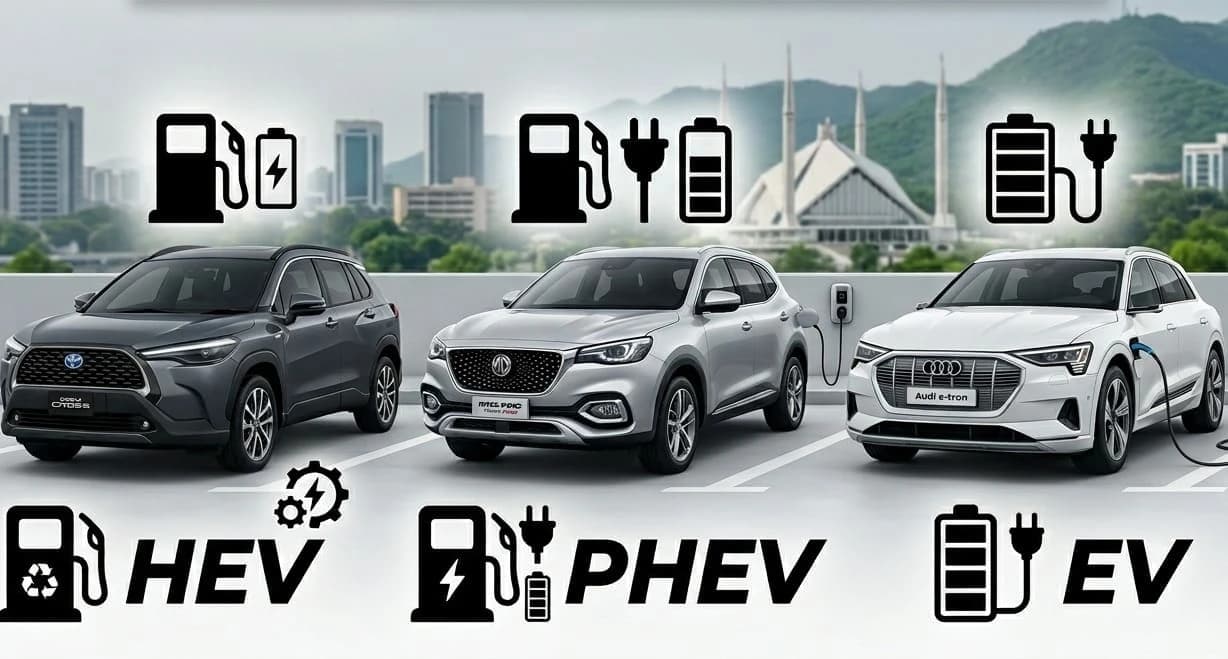
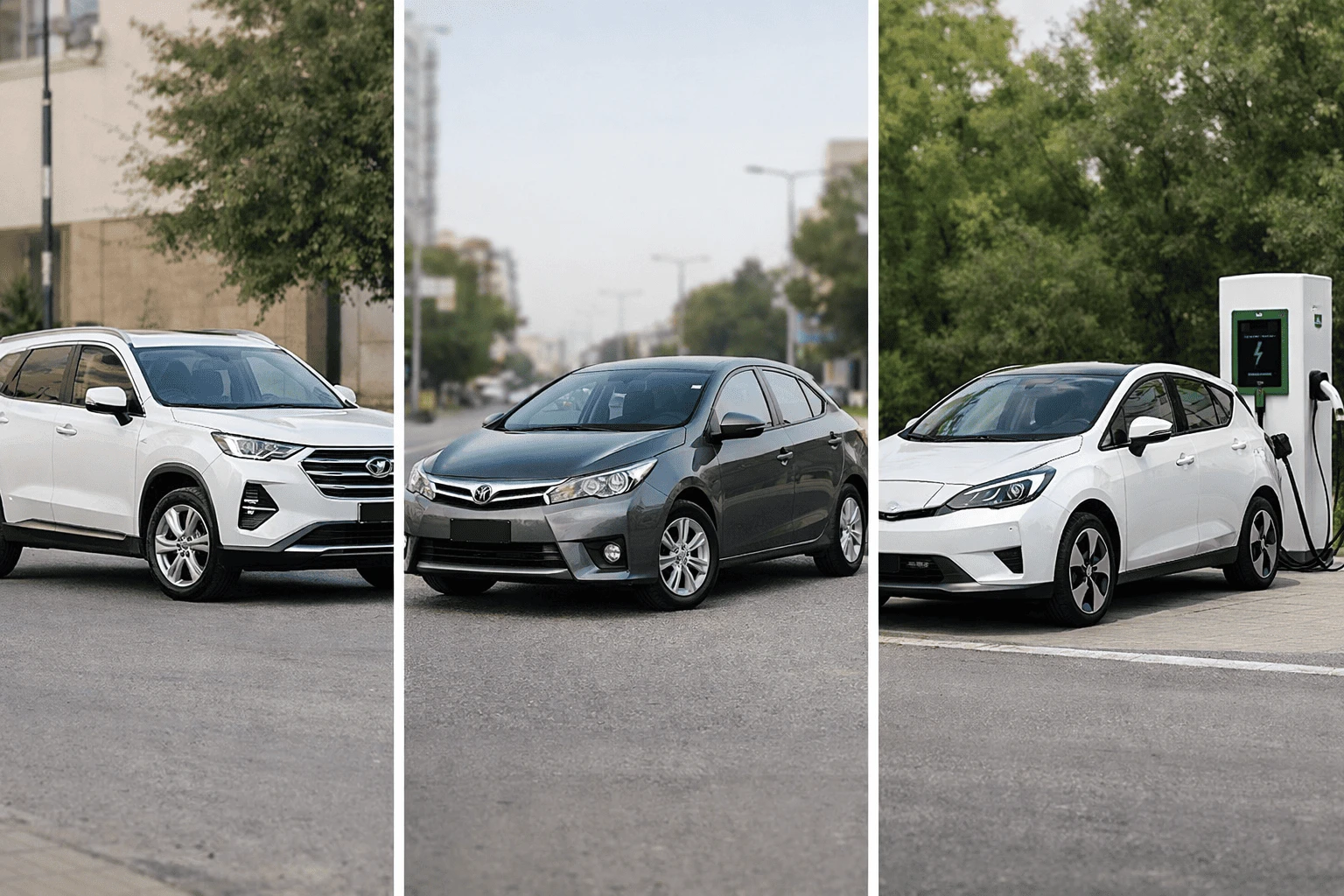
In 2026, buying a car in Pakistan isn’t just about picking manual or automatic anymore. The real question on buyers’ minds is: EV, Hybrid, or Petrol? And let’s be honest — it can feel a bit overwhelming.
Fuel prices keep swinging, electricity tariffs are climbing, and the government’s NEV (New Energy Vehicle) policy is actively pushing electric adoption. Social media is flooded with EV reviews, but on the streets, petrol cars still dominate. Meanwhile, hybrids are quietly gaining traction among urban drivers who want a balance of efficiency and convenience. So how do you decide what makes sense for you? It really boils down to three practical considerations:
Let’s cut through the hype and look at the options clearly — practical, real-world guidance for Pakistani drivers who want smart, informed decisions.
When comparing electric cars in Pakistan with hybrid and petrol options, you must look beyond the showroom price. Ownership cost tells the real story.

Let’s start with the first shock — the price tag. In 2026, the market roughly looks like this:
Petrol cars clearly win in affordability. If your budget is tight, they’re the easiest entry point. Hybrids sit in the middle. They cost more than petrol but are still within reach for many upper-middle-class buyers. EVs, on the other hand, require a higher upfront commitment. Some newer models are becoming more affordable, but overall, electric vehicles still demand a larger initial investment. This is why many Pakistani buyers hesitate — even though EVs promise lower running costs in the long term.
Now comes the part that changes everything. Running cost per kilometer in 2026:
Even with electricity tariffs averaging PKR 32–40 per kWh, EVs remain about 70–80% cheaper per kilometer compared to petrol cars.
Let’s use a realistic example:
If you drive 15,000 km per year:
That’s a massive difference. Over five years, the savings become even more noticeable. This is why many EV owners say the car feels expensive to buy but cheap to live with.
This is where most comparisons stop — but in Pakistan, resale value and risk matter just as much as savings.
Hybrid Break-Even Reality
If a hybrid SUV costs around PKR 4 million more than its petrol equivalent, you’ll need roughly 115,000 km to recover that difference through fuel savings.
So hybrids make the most sense for:
If you drive very little annually, it may take too long to justify the premium.
EV Depreciation Warning
Some imported EV models are seeing 15–25% price corrections within 18 months due to:
This doesn’t mean EVs are bad. It simply means they’re better suited for long-term ownership rather than short-term resale flipping.
Resale Ease in Pakistan
In Pakistan’s market, liquidity equals peace of mind — and petrol still leads here.
| Factor | Petrol | Hybrid (HEV/PHEV) | Electric (EV) |
|---|---|---|---|
| Upfront Price (PKR) | 2M – 10M | 7.2M – 15M | 6M – 2.85 Crore |
| Running Cost per km | ~25/km | ~12–15/km | ~2–4/km |
| Annual Cost (15,000 km) | ~375,000 | ~202,500 | ~45,000 |
| Best For | Low mileage, rural travel | Urban commuters, mixed driving | High mileage, city users with home charging |
| Resale Value | Excellent, easiest to sell | Strong (especially Toyota/Honda) | Improving but evolving |
| Maintenance | Regular oil changes, simple repairs | More complex (engine + battery) | Minimal routine maintenance |
| Long-Distance Travel | Most convenient | Very practical | Requires route planning |
| City Traffic Efficiency | Lower fuel average | Very efficient | Extremely efficient |
| Break-Even Potential | No premium to recover | ~115,000 km to justify price gap | Long-term savings justify higher upfront cost |
| Risk Level (Market) | Lowest risk | Moderate risk | Higher short-term depreciation risk |
| Ownership Horizon Ideal | Short to medium term | Medium to long term | Long-term (5+ years) |
Numbers are important. But real life in Pakistan isn’t just math. It’s traffic, long routes, unpredictable infrastructure, and maintenance concerns. Let’s test each option in real scenarios.
City driving usually means:
This is where hybrids perform beautifully. Regenerative braking helps recharge the battery in traffic. That’s why hybrids like:
These are becoming popular in major cities. EVs also perform extremely well in cities. They’re smooth, silent, and effortless in traffic. If you have home charging — especially with solar — your daily commute becomes incredibly cheap. Petrol cars work fine in cities, but traffic reduces the fuel average significantly, increasing monthly expenses.
Urban Winner:
Now imagine a Lahore–Islamabad trip or a village visit.
Petrol Cars:
Still the most convenient. Petrol pumps are everywhere. No planning required.
Hybrid Cars:
No charging worries. They behave like petrol cars on highways while offering better fuel economy.
EVs:
Capable of highway driving, but the charging infrastructure outside major cities is still limited. Planning becomes necessary.
If you frequently travel long distances or to remote areas, petrol and hybrid vehicles offer more flexibility.
Highway Winner:
Another big concern in Pakistan: “What if something breaks?”
Petrol Cars:
Hybrid Cars:
EVs:
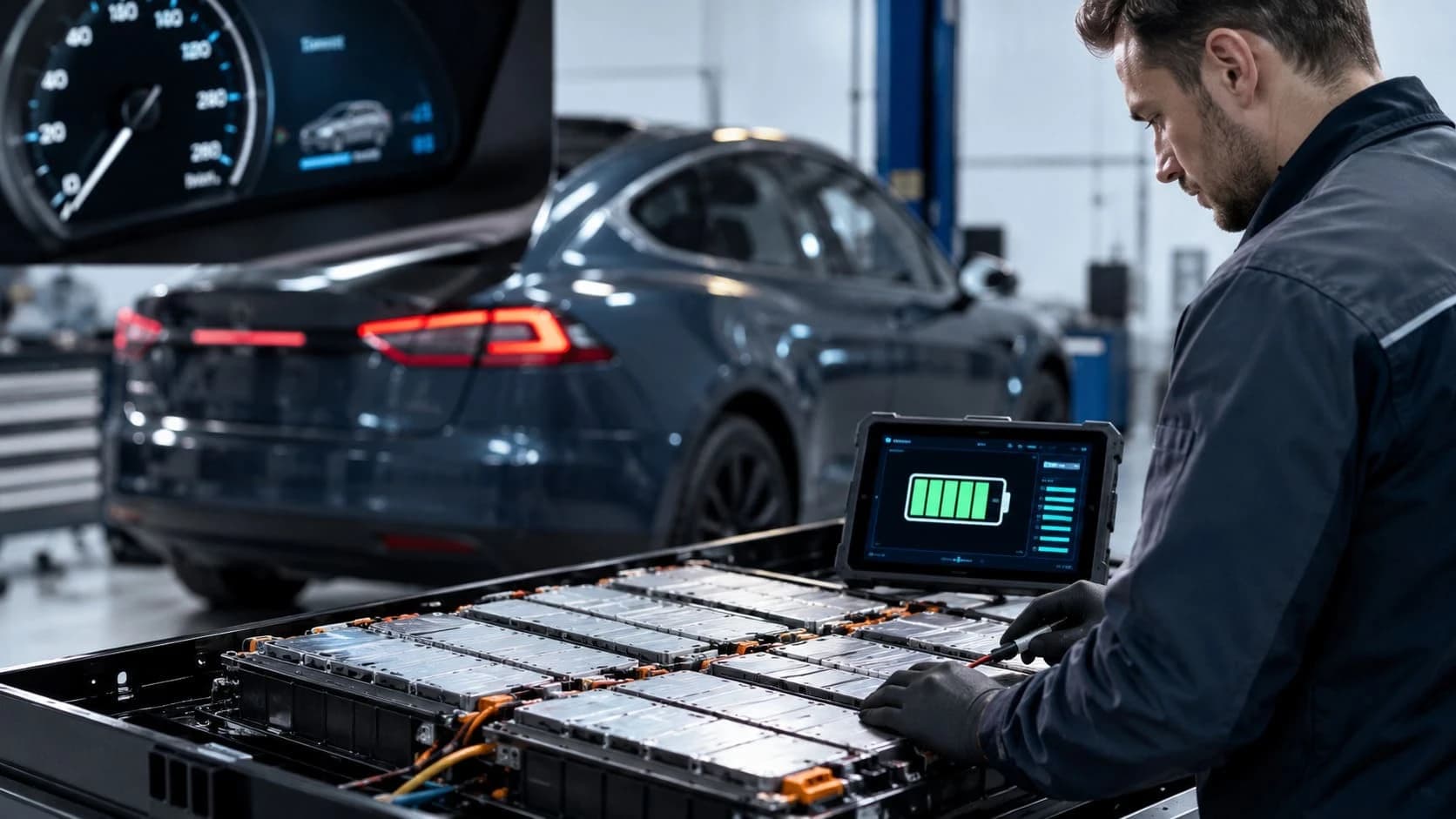
EVs actually require less routine maintenance. However, concerns about battery life and replacement cost still influence buyer confidence — especially in the used market. The good news: most EV manufacturers provide long battery warranties.
Now let’s simplify everything.

Recommended Models:
Petrol remains the safest and most familiar option.
Recommended Models:
Hybrids are currently Pakistan’s most balanced solution.
Recommended Models:
EVs offer the lowest running cost in Pakistan — but they reward long-term thinking.
There is no universal winner in the EV vs Hybrid vs Petrol debate.
In 2026, the smartest decision comes down to this:
Don’t follow trends. Run your own numbers. Think about your lifestyle. And choose the car that fits your reality — not just the hype. Because in Pakistan, the smartest car isn’t the newest technology. It’s the one that makes financial and practical sense for you.

Mushraf Baig is a content writer and digital publishing specialist focused on data-driven topics, monetization strategies, and emerging technology trends. With experience creating in-depth, research-backed articles, He helps readers understand complex subjects such as analytics, advertising platforms, and digital growth strategies in clear, practical terms.
When not writing, He explores content optimization techniques, publishing workflows, and ways to improve reader experience through structured, high-quality content.
Used hybrid cars are popular in Pakistan because they promise better fuel economy, smoother city dri
5 June 2026
In recent years, Pakistan’s roads have quietly begun to tell a new story — one of a coun
20 January 2026
Toyota Just Shocked the Auto World — And It’s Headed to Pakistan Soon: For the first tim
11 November 2025
Be the first to share your thoughts
No comments yet. Be the first to comment!
Share your thoughts and join the discussion below.
.webp&w=3840&q=75)