* All product/brand names, logos, and trademarks are property of their respective owners.
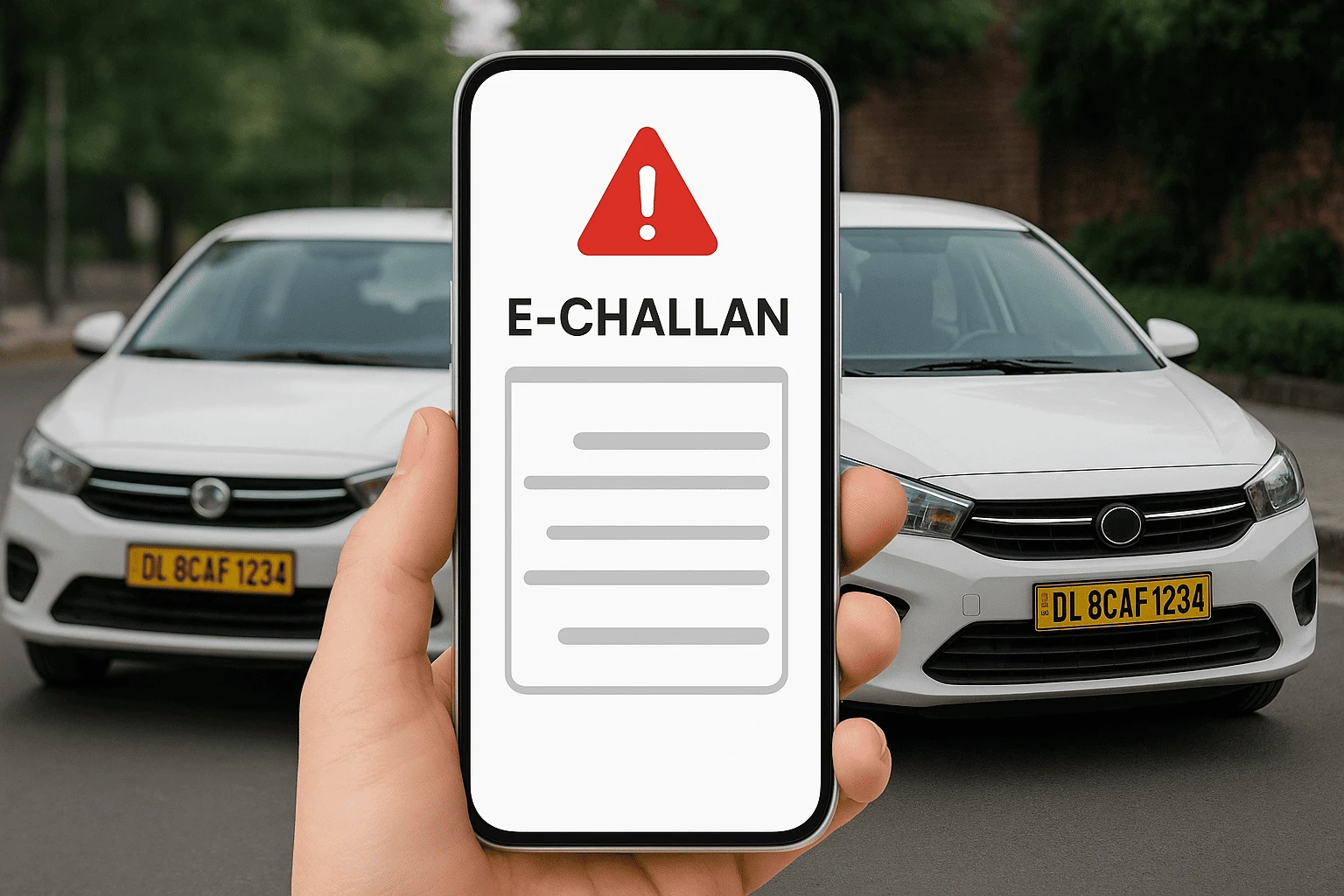
E-Challan Mistake? You're Not Alone — Here's What You Can Do: You wake up, check your messages, and there it is — an e-challan notice for a traffic violation in a place you’ve never even been. Your heart skips a beat. You’re sure your car wasn't there. You double-check your schedule, look at your vehicle in the driveway, and yet, the system insists you broke the law.
Sounds familiar? You're not the only one.
More and more drivers across Pakistan are receiving wrong e-challans because of cloned number plates, outdated vehicle records, or even simple system glitches. It’s stressful, unfair, and often leaves people confused about what to do next — especially when the challan amount isn’t small.
Whether you're in Lahore, Karachi, Islamabad or Peshawar, this issue is becoming increasingly common. With the rise of automated camera-based traffic monitoring systems like Punjab Safe Cities Authority (PSCA) and the Sindh Safe City Project, mistakes — especially related to fake or duplicated number plates — are becoming harder to dispute, unless you know exactly how to tackle them.
But here’s the good news: This blog gives you a step-by-step guide to verify, dispute, and resolve a wrong e-challan — specifically when it's caused by a cloned number plate.
We’ll also cover:
How to spot signs of plate cloning before paying
Where and how to file complaints or verify video footage
What to do if your number plate has been fraudulently copied
And most importantly, how to protect yourself from such mistakes in the future
No legal jargon. No stress. Just a clear action plan to help you fix this mess — the right way.
Not every e-challan that lands in your inbox or on your doorstep is accurate — especially in cities where automated traffic systems rely heavily on number plate recognition. If someone else is driving around with your plate number on their car, you could get fined for something you never did. Here's how to tell if your challan is fake or triggered by a cloned number plate.
If any of these apply to your situation, hit pause before paying the fine:
Date or time mismatch — You or your car weren’t on the road at the time listed.
Location confusion — The violation occurred in a city or area you haven’t visited.
Vehicle mismatch — The make/model or color shown in the image doesn’t match your car.
Blurry photo evidence — The number plate in the picture is unclear or barely visible.
Multiple recent challans — Several challans appear back-to-back in cities far apart, suggesting misuse.
Before jumping to conclusions, always cross-check your vehicle data using your region’s MTMIS portal (Motor Transport Management Information System).
Here’s how:
Punjab: mtmis.punjab.gov.pk
Sindh: excise.gos.pk
You can also check pending e-challans using your CNIC or registration number. If your car shows multiple violations in unfamiliar areas, it’s a strong signal that your number plate may be cloned.
A driver in Lahore received an e-challan for overspeeding in a Honda Civic — even though he owned a Suzuki Mehran and hadn’t left the city that day. Upon visiting the PSCA office, the footage revealed a Civic with a fake plate identical to his. The challan was dismissed, and an FIR was filed for plate cloning.
These real stories highlight how easily number plates can be duplicated — and how important it is to investigate every challan before paying it blindly.
If you've confirmed that your e-challan isn’t valid and you suspect your number plate has been cloned, don’t panic — the law is on your side. Pakistan’s traffic enforcement agencies have procedures in place for these exact situations. You just need to follow the right steps, gather proof, and stay calm. Here's exactly what you need to do:
Before visiting any traffic or police authority, make sure you have the following documents ready:
Your original CNIC
Vehicle registration card or book
A printed copy of the wrong e-challan
Recent, clear photos of your car (front, back, and number plates)
Any receipts or proof of previous vehicle sale (if you no longer own the car)
Pro tip: Keep both physical and digital copies (on your phone or USB) — it makes the process faster.
In Punjab (especially Lahore):
| Department | Helpline / Contact |
|---|---|
| Punjab Safe Cities Authority (PSCA) | 15 (Police Helpline) / 042-99051606 |
| City Traffic Police Lahore (CTPL) | 042-99204619–20 |
| City Traffic Police Email | [email protected] |
| Excise & Taxation Department, Punjab | 0800-08786 |
| Official Excise Website (Punjab) | https://excise.punjab.gov.pk/ |
In Karachi or Sindh:
| Department | Helpline / Contact |
|---|---|
| Sindh Police (Traffic Branch) | 1715 (Helpline) / 0219-9216355 |
| Karachi Traffic Police Headquarters | 021-99256547 |
| Sindh Traffic Police Email | [email protected] |
| Excise & Taxation Dept. Sindh – Contact Number | 92-21-99231410 |
| Excise & Taxation Dept. Sindh – Email Address | [email protected] |
Other Regions (Islamabad, KPK):
Visit your local Excise and Taxation office
Bring your documents and request to verify the e-challan video, if available
Most departments now allow email or app-based requests too
If video evidence clearly shows that your plate has been fraudulently duplicated, ask the authority to:
Cancel the challan in your vehicle’s record
Issue a verification letter or official notice stating the challan was due to plate cloning
Help you file an FIR against “unknown” for plate misuse
Filing an FIR is important — it not only clears your record but also helps prevent future abuse of your number plate. You can file it at your local police station or ask the PSCA/Traffic HQ for assistance with the legal process.
In extreme cases or repeated misuse, you can consult a legal advisor to pursue the matter through court, especially if the traffic fines start affecting your record or future registrations.
Getting a wrong e-challan once is frustrating — but what if it happens again? Plate cloning isn’t always a one-time scam. In fact, once fraudsters copy your number, they might use it repeatedly unless you take steps to protect yourself.
Luckily, there are a few easy things you can do to prevent future trouble. Prevention is always better (and cheaper) than a dispute.
That stylish custom number plate might look cool, but it could be putting you at risk.
Here’s why:
Non-standard fonts are harder for Safe City cameras to recognize — which leads to misreads.
Duplicate or handmade plates (often from local workshops) can be copied by others easily.
Plates with missing elements (no province name, incorrect spacing) are more likely to be misidentified by the system.
Always use official, government-issued number plates. If yours is damaged or missing, visit your regional Excise & Taxation Department to get a verified replacement.
Protecting your number plate is not a one-time task — make it a regular habit:
Check your vehicle’s e-challan status every 2–4 weeks using your region’s Safe City or Excise portal.
Subscribe to SMS alerts (available in Punjab and some parts of Sindh).
Keep all vehicle documents updated with your correct address and phone number.
Avoid parking your vehicle in unguarded, dark, or high-risk areas where it can be photographed or copied.
These simple habits can help you spot suspicious activity before it becomes a problem.
Several provinces now offer digital tools that help you stay one step ahead:
MTMIS Punjab: Check registration status and e-challan history at mtmis.punjab.gov.pk
Sindh Excise Portal: Use their site to view your e-challan, registration info, and more
Karachi Traffic Police App (Android): Lets you check e-challans, file complaints, and even verify footage in some cases
The earlier you spot an issue, the easier it is to fix. These apps make it simple to monitor your vehicle’s digital footprint — for free.
If you’ve received a wrong e-challan because of a cloned number plate, it’s completely natural to feel confused, frustrated, or even a little anxious. But remember — you’re not alone, and more importantly, you have options.
Across Pakistan, from Lahore to Karachi and beyond, traffic monitoring systems are still evolving. While they’ve helped catch thousands of real violators, they’re also prone to mistakes — and innocent drivers like you sometimes get caught in the crossfire.
The good news? You don’t have to pay for someone else’s crime.
Let’s quickly recap your action plan:
Spot the signs early — mismatched photos, weird locations, and unclear footage
Use MTMIS and Safe City portals to verify your records
Visit the PSCA or the Traffic Police offices for footage verification
Collect your documents, request cancellation, and file an FIR if cloning is confirmed
Adopt prevention habits to avoid being targeted again
Above all, stay calm and informed. You now have a clear step-by-step roadmap — so you’re already ahead of the curve.
If this guide helped you, share it with your friends and family. Cloned plates are more common than people think, and your share might just save someone else from paying a fine they don’t deserve.
Need help with MTMIS portals or filing a complaint? Let us know in the comments or reach out to your local traffic police office — they’re there to help.

I am Zeenat, an SEO Specialist and Content Writer specializing in on-page and off-page SEO to improve website visibility, user experience, and performance.
I optimize website content, meta elements, and site structure, and implement effective off-page SEO strategies, including link building and authority development. Through keyword research and performance analysis, I drive targeted organic traffic and improve search rankings.
I create high-quality, search-optimized content using data-driven, white-hat SEO practices, focused on delivering sustainable, long-term growth and improved online visibility.
Pakistani car buyers are hearing more about EVs, hybrids, plug-in hybrids, range extenders, new ener
4 June 2026
Auto tech innovations in Pakistan are changing the way people think about driving, safety, fuel savi
26 May 2026
Not long ago, driving meant full control—hands on the steering wheel, eyes on the road, and ev
1 May 2026
Be the first to share your thoughts
No comments yet. Be the first to comment!
Share your thoughts and join the discussion below.