* All product/brand names, logos, and trademarks are property of their respective owners.
The way people drive in Pakistan has changed a lot over the last few years. A car is no longer just a machine that takes you from one place to another. For many drivers, it has become a part of their digital lifestyle. People use Google Maps to avoid traffic, stream music through infotainment systems, track their vehicles with mobile apps, and rely on ride-hailing platforms for work and daily travel. In all of this, internet connectivity plays a major role.
That is where the Pakistan Telecommunication Authority (PTA) becomes important.
Most people know PTA as the organization that regulates mobile networks, SIM registration, and telecom services in Pakistan. But many car owners do not realize that PTA also affects their driving experience in indirect yet meaningful ways. Whether you own a locally assembled car, an imported vehicle, or drive for a ride-hailing platform, PTA policies and telecom standards can influence how smoothly your digital car features work.
This article explains how PTA affects car connectivity and navigation in Pakistan, why it matters to drivers, and what challenges remain in the current market.
The Pakistan Telecommunication Authority is the regulatory body responsible for supervising telecom services in the country. It oversees mobile operators, internet services, spectrum management, quality standards, and device-related telecom regulations.
In simple words, PTA helps shape how mobile communication works in Pakistan. Since modern driving now depends heavily on mobile internet, GPS-enabled apps, and connected devices, the authority’s role naturally affects car owners as well.
PTA does not regulate cars in the way transport departments or automotive authorities do. It does not decide on road taxes, registration policies, or vehicle safety inspections. However, it does regulate the communication systems that many modern vehicles and drivers depend on every day.
That is why its impact on the automotive world is often indirect, but still very real.
A few years ago, car buyers in Pakistan were mainly concerned with fuel economy, resale value, engine performance, and spare parts availability. Those factors are still important, but now buyers also care about features like touchscreen infotainment systems, Bluetooth connectivity, reverse cameras, navigation, Android Auto, Apple CarPlay, and online vehicle tracking.
For urban drivers especially, internet-powered tools are becoming essential. Google Maps helps with live traffic conditions. Ride-hailing drivers rely on apps for bookings and directions. Families use tracking systems for safety. Some imported vehicles even come with built-in connectivity features designed for remote access or advanced infotainment.
All these functions depend on one thing: reliable telecom service.
If mobile internet is weak, navigation becomes less useful. If network coverage is poor, tracking devices become unreliable. If imported connectivity modules are incompatible, some smart features may stop working completely.
One of the clearest examples of PTA’s indirect impact on car owners is navigation.
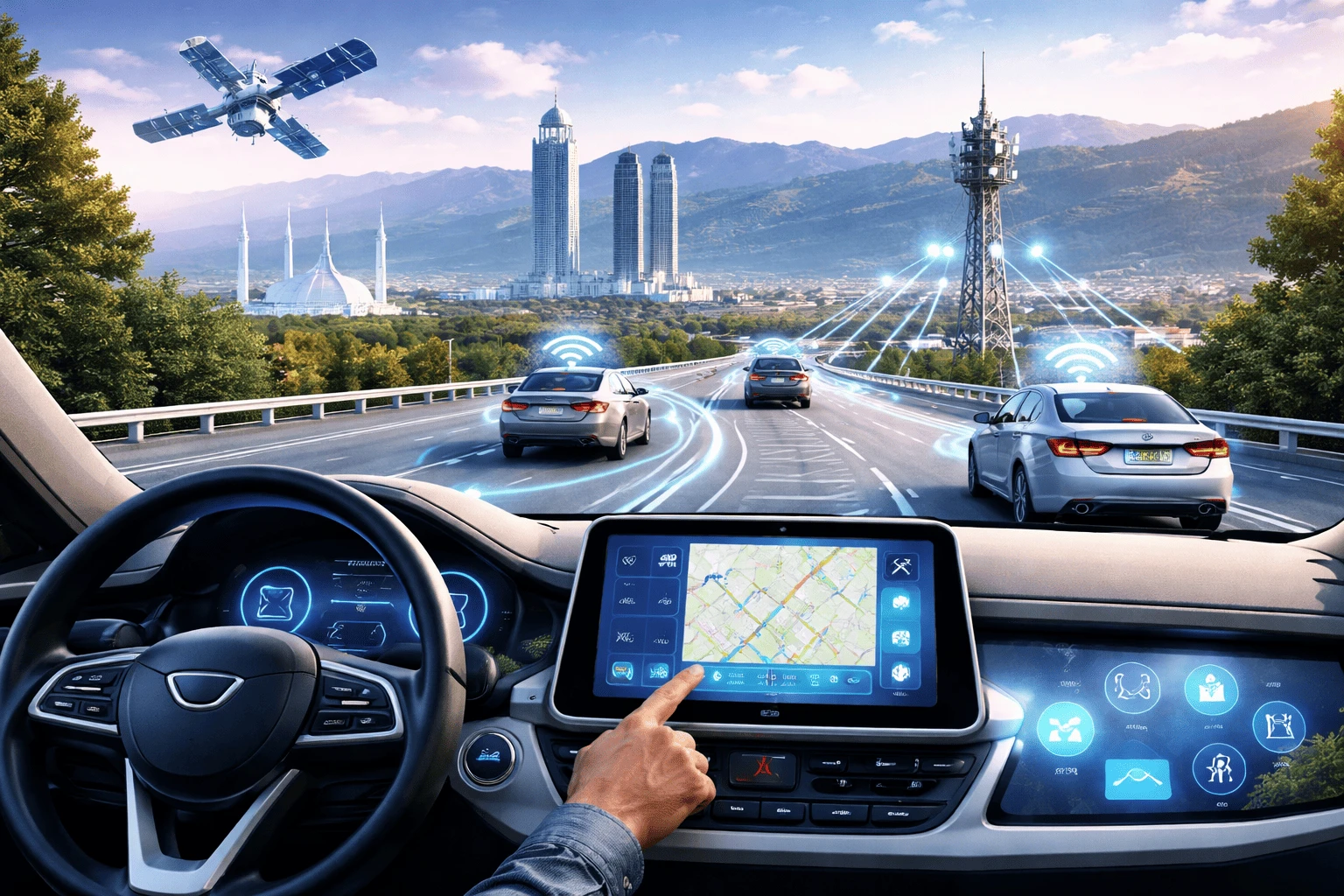
Thousands of drivers across Pakistan now use apps like Google Maps for everyday travel. Whether someone is commuting to work in Lahore, visiting a customer in Karachi, or taking a long drive on the motorway, digital navigation has become part of normal driving.
But navigation apps do not work in isolation. They depend on:
PTA regulates the telecom companies that provide these services. So while the authority does not control Google Maps directly, it influences the infrastructure that helps such apps perform properly.
For example, in areas where mobile service is stable, route updates are smoother and traffic information is more accurate. In places with weak signals, maps may load slowly, rerouting may fail, and live updates may lag behind real road conditions.
This may sound like a small issue, but for many drivers, it affects time, fuel efficiency, and convenience. For ride-hailing drivers or delivery riders, it can also affect income.
Imported cars in Pakistan often come with more advanced technology than many locally available vehicles. These cars may include built-in navigation systems, SIM-based communication units, remote apps, or internet-dependent infotainment features.
However, many of these systems are originally designed for foreign markets such as Japan, the UK, or the UAE. That means their connectivity setup may not always align with Pakistan’s local telecom environment.
As a result, some owners discover that while the car looks technologically advanced, certain features do not work as expected after import. Some apps remain inactive. Some built-in communication modules cannot connect properly. Some services that worked abroad are unavailable or unsupported locally.
This does not always happen because the car is faulty. In many cases, it is because the system was not made for local network conditions, local app ecosystems, or PTA-governed telecom compatibility.
That is why many Pakistani users replace original infotainment systems with Android-based units that are easier to connect with local mobile hotspots or SIM-supported devices. It is often a more practical solution for everyday use.
PTA is widely known for regulating mobile devices, but its impact goes beyond smartphones. For car owners, especially those with imported vehicles, telecom compatibility can affect how well certain smart features work.
| Aspect | Explanation | Real Impact on Car Owners |
|---|---|---|
| Device Regulation | PTA regulates telecom-enabled devices in Pakistan, mainly focusing on mobile connectivity standards. | Some imported in-car systems may not fully align with local telecom requirements. |
| Embedded Car Technology | Modern imported cars may include SIM-based or internet-connected modules. | These systems may not function properly if they are not compatible with local networks. |
| Network Compatibility | Foreign vehicles are designed for networks in countries like Japan, UK, or UAE. | Features like navigation, apps, or connectivity may work partially or not at all. |
| Smart Features Functionality | Cars may offer advanced digital features on paper. | In Pakistan, these features can be limited due to telecom restrictions or incompatibility. |
| User Expectations vs Reality | Buyers expect full functionality based on international specs. | Real-world usage may differ, leading to disappointment or reduced usability. |
| PTA’s Indirect Role | PTA does not regulate cars directly but controls telecom infrastructure. | It influences how well-connected features perform in local conditions. |
PTA’s impact becomes even more obvious when we look at ride-hailing and transport-related services.
Drivers working with platforms such as Careem, inDrive, and similar services rely on continuous mobile connectivity. Their work depends on:
If network quality is poor, their work suffers. A delayed signal can mean a missed ride. Weak internet can affect location accuracy. A failed app refresh can create confusion between the driver and the customer.
This is not limited to ride-hailing only. Commercial fleet owners, logistics companies, and transport businesses also use GPS tracking and digital fleet management tools. These systems rely on mobile data networks that operate under PTA-regulated telecom frameworks.
So when telecom performance improves, the benefits are not limited to smartphone users. They also reach drivers, fleet operators, passengers, and businesses that depend on digital mobility.
Vehicle tracking has become an important feature for many Pakistani car owners. Some use it for anti-theft protection, others for family monitoring, and businesses use it for fleet visibility.
Tracking systems depend heavily on telecom connectivity. A tracker in a vehicle sends information using mobile networks. If network strength is weak or unstable, updates may be delayed or inaccurate.
For drivers, this is not just a convenience issue. It can also be a safety issue. In situations involving theft, route monitoring, or emergency location access, timely and stable communication matters.
This is another area where PTA’s role is indirect but meaningful. Since it regulates the network environment in which these services function, it contributes to the overall reliability of such tools.
At present, Pakistan’s car-related connectivity mostly depends on 3G and 4G networks. These networks support most of the digital tools drivers commonly use today, including maps, music streaming, ride-hailing apps, and tracking systems.
That means the current connected driving experience in Pakistan is not based on futuristic smart roads or autonomous vehicle communication. It is based on practical, everyday digital tools running through regular mobile data networks.
For most people, that is enough. But it also means limitations remain. Drivers in urban areas may enjoy a smoother experience than those in smaller cities or remote regions. Long-distance travelers may face patchy network zones. Imported advanced systems may still feel underused.
While Pakistan currently relies on 4G networks, advanced technologies like 5G and V2X communication are already transforming cars globally. You can learn more about this in our detailed guide on 5G & V2X connectivity in cars.
Even today, Pakistani car owners face several connectivity-related challenges.
The first is uneven network coverage. In major cities, connectivity is generally stronger, but in some rural or remote areas, signals may drop and affect app performance.
The second is compatibility. Not all imported digital systems are designed for Pakistan’s telecom environment.
The third is awareness. Many buyers assume that if a feature is available in the car, it will automatically work the same way here. In reality, local telecom conditions play a major role.
The fourth is dependence on mobile devices. In many cars, the “smart” experience is not truly built into the car itself but depends on the user’s own phone and internet connection.
For everyday drivers, PTA may seem unrelated to the automotive world. But once we look closely, its relevance becomes clear.
That does not mean PTA is the only factor. Carmakers, telecom operators, software providers, and local infrastructure all play their part. But PTA remains an important piece of the wider ecosystem.
As Pakistani roads become more digitally connected, the relationship between telecom regulation and the driving experience will only become more noticeable.
Cars in Pakistan are changing. Even if fully connected smart cars are still limited, the average driving experience is already becoming more digital. Navigation apps, infotainment systems, app-based transport services, and vehicle tracking are now part of daily life for many drivers.
In that environment, PTA matters more than most people realize.
It may not build cars or regulate engines, but it helps shape the telecom infrastructure behind many of the digital services drivers use every day. For that reason, understanding PTA’s role gives car owners a more realistic view of why some features work well, why others struggle, and why connectivity has become such an important part of modern driving in Pakistan.
For Pakistani drivers today, good driving is no longer just about horsepower or fuel economy. It is also about signal strength, app usability, and digital reliability on the road.
If you're planning to upgrade your car setup, you can also explore the best car audio systems in Pakistan for 2025 for detailed recommendations.
No, PTA does not directly regulate cars. It regulates telecom services, mobile networks, and communication standards. Its impact on cars is indirect and mostly related to connectivity, navigation, and digital features.
Many imported cars are designed for foreign markets and may use systems that are not fully compatible with local network environments. That is why some built-in apps, navigation tools, or smart features may not work smoothly in Pakistan.
PTA regulates telecom companies and mobile internet services. Since apps like Google Maps rely on data connectivity, network quality directly affects navigation accuracy, route updates, and overall app performance.

I am Zeenat, an SEO Specialist and Content Writer specializing in on-page and off-page SEO to improve website visibility, user experience, and performance.
I optimize website content, meta elements, and site structure, and implement effective off-page SEO strategies, including link building and authority development. Through keyword research and performance analysis, I drive targeted organic traffic and improve search rankings.
I create high-quality, search-optimized content using data-driven, white-hat SEO practices, focused on delivering sustainable, long-term growth and improved online visibility.
Pakistani car buyers are hearing more about EVs, hybrids, plug-in hybrids, range extenders, new ener
4 June 2026
Auto tech innovations in Pakistan are changing the way people think about driving, safety, fuel savi
26 May 2026
Not long ago, driving meant full control—hands on the steering wheel, eyes on the road, and ev
1 May 2026
Be the first to share your thoughts
No comments yet. Be the first to comment!
Share your thoughts and join the discussion below.