Auto Dost

Auto News
Car Reviews
Bike Reviews
EVs & Hybrid
Motorsports
Auto Tech
Comparisons
Car Care & Tips
Buyer's Guide
Modifications
Friday, May 1, 2026
Auto Dost
Auto Dost

Auto Dost is your trusted automotive companion — bringing expert car and bike reviews, the latest auto news, EV updates, modification tips, buyer’s guides, and in-depth comparisons. From daily drivers to motorsports, we cover everything that fuels your passion for vehicles.

Follow us

Categories

  • Auto News
  • Car Reviews
  • Bike Reviews
  • EVs & Hybrid
  • Motorsports
  • Auto Tech
  • Comparisons
  • Car Care & Tips
  • Buyer's Guide
  • Modifications

Policies

  • About
  • Get inTouch Auto Dost
  • Privacy Policy
  • Terms & Conditions
  • Disclaimer

Newsletter

Subscribe to Email Updates

Subscribe to receive daily updates direct to your inbox!

*We promise we won't spam you.

*All content on Auto Dost is for educational and informational purposes only.

© 2026 Auto DostbyTETRA SEVEN

HomeAuto TechFrom Steering Wheels to Smart Brains: The Rise of AI Cars in 2026

From Steering Wheels to Smart Brains: The Rise of AI Cars in 2026

ByFeroza Arshad

1 May 2026

From Steering Wheels to Smart Brains: The Rise of AI Cars in 2026

* All product/brand names, logos, and trademarks are property of their respective owners.

0

views


FacebookTwitterPinterestLinkedIn

Not long ago, driving meant full control—hands on the steering wheel, eyes on the road, and every decision resting on the driver. Fast forward to 2026, and that experience is quietly transforming. Cars are no longer just machines you operate—they’re becoming systems that think, learn, and make decisions on their own.

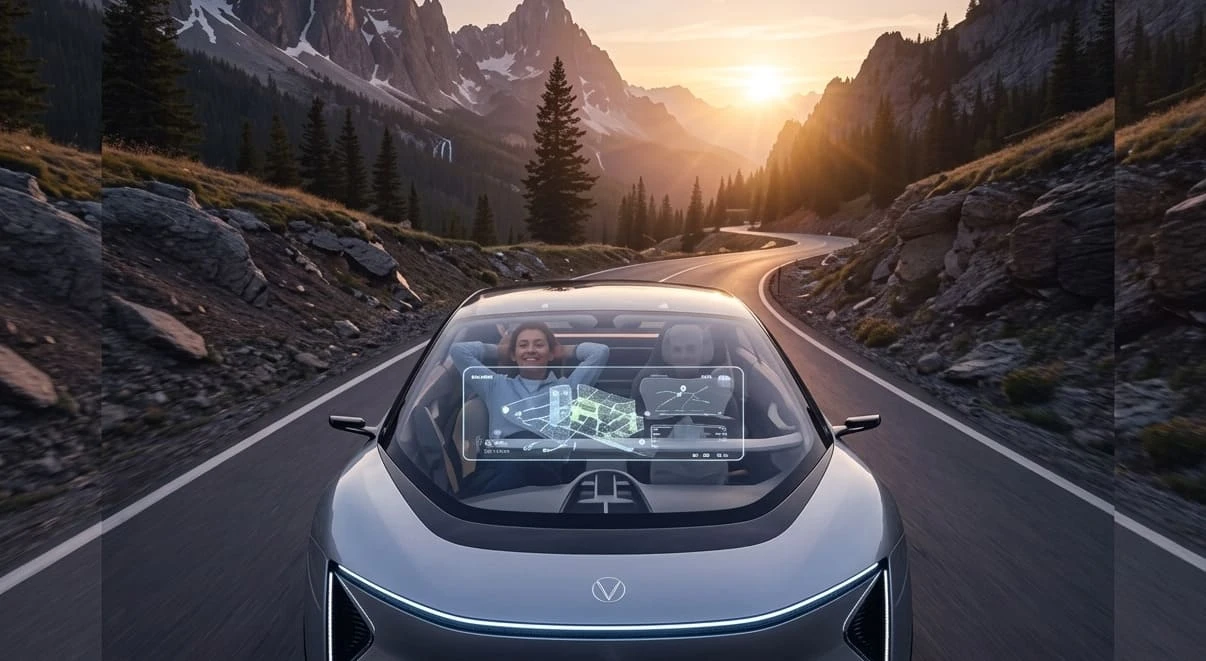
The rise of AI cars in 2026 marks a major shift in how people interact with vehicles. Instead of reacting to the road, modern cars can predict, adapt, and respond in real time. From navigating traffic to avoiding accidents, these vehicles rely on intelligent systems rather than human instinct alone.

This transition from mechanical control to smart automation isn’t happening overnight—but it’s already reshaping daily driving in ways that feel both exciting and, at times, unfamiliar.

AI Cars in 2026 — A Simple Breakdown

AI cars are vehicles that use artificial intelligence to understand the road, process information, and support or control driving decisions. Instead of relying only on a human driver, these cars collect data from cameras, sensors, radar, GPS, and onboard software.

In 2026, most AI cars will not be fully driverless everywhere. Many are still designed to assist the driver rather than completely replace them. For example, a car may help with lane keeping, automatic braking, adaptive cruise control, or parking. These features reduce pressure on the driver, but human attention is still needed in many situations.

Fully autonomous cars go further. They can handle the driving task in certain areas or conditions without constant human input. Companies like Tesla, Waymo, and other automotive technology firms are pushing this space forward, especially in controlled city zones, ride-hailing services, and advanced electric vehicles.

The easiest way to understand AI cars is this: traditional cars follow your commands, while AI cars can sense, analyze, and respond. That smart decision-making is the real difference.

From Steering Wheels to Smart Brains — The Big Shift

Cars have been getting smarter for years, but 2026 feels like a turning point. The focus is no longer only on speed, design, or engine power. Now, the real competition is intelligence.

Older vehicles depended almost entirely on the driver. The car responded when a person turned the wheel, pressed the brake, or changed lanes. AI cars work differently. They use technology to read the surroundings, understand patterns, and make faster decisions.

A few core systems power this shift:

  • Sensors and cameras that detect lanes, vehicles, pedestrians, signs, and obstacles
  • Machine learning that helps the car improve through data and driving patterns
  • Real-time processing that allows quick decisions in traffic or emergencies
  • Connected systems that may communicate with maps, traffic networks, and other vehicles

The steering wheel is still there in many cars, but the “brain” of the vehicle is becoming more important than ever.


Key Features Inside Modern AI Cars

Modern AI cars are built around intelligent systems that go far beyond basic automation. These features are designed to make driving smoother, safer, and more efficient—whether the human is actively driving or not.

Here are some of the most important capabilities shaping AI cars in 2026:

  • Self-driving assistance
    Cars can handle tasks like lane keeping, speed adjustment, and even highway driving with minimal input. In some cases, they can drive themselves in specific zones or conditions.
  • Predictive navigation
    AI doesn’t just follow maps—it analyzes traffic patterns, road conditions, and past behavior to suggest faster and smarter routes.
  • Real-time traffic adaptation
    Instead of reacting late, AI systems adjust instantly to traffic changes, accidents, or roadblocks, helping reduce delays and sudden braking.
  • Voice and AI assistants
    Drivers can interact naturally with the car—setting destinations, controlling climate, or asking for updates without touching a screen.
  • Advanced safety systems
    Features like automatic emergency braking, collision avoidance, blind-spot monitoring, and pedestrian detection are now more accurate and proactive.
  • Continuous learning
    Many AI cars improve over time through software updates and data analysis, meaning the vehicle can actually get “smarter” after purchase.

These features show how cars are no longer just tools for movement—they’re becoming responsive, learning systems that adapt to both the driver and the environment.

Traditional Cars vs AI Cars (2026 Comparison)


Feature Traditional Cars AI Cars (2026)
Control Fully human-driven Shared or AI-assisted control
Safety Depends on driver awareness AI-powered prevention & detection
Driving Experience Manual and reactive Assisted, predictive, and smoother
Efficiency Fixed routes and habits Optimized routes in real time
Human Involvement Constant attention required Reduced effort in many situations


Traditional cars rely almost entirely on human skill and reaction time. Every decision—from braking to turning—depends on the driver’s awareness and judgment.

AI cars, on the other hand, bring intelligence into the equation. They can detect risks earlier, respond faster, and adjust driving patterns based on real-time data. While human input remains part of the process in many cases, the overall experience becomes more automated and less stressful.


Real Benefits Seen on the Road

As AI cars become more common in 2026, their impact is starting to show in everyday driving—not just in theory, but in real situations people experience daily.

Here are some of the most noticeable benefits:

  • Safer roads
    AI systems can detect dangers faster than humans. Features like automatic braking and collision avoidance reduce accidents caused by delayed reactions or distractions.
  • Less traffic stress
    With smarter navigation and real-time adjustments, AI cars help avoid congestion and reduce stop-and-go driving, especially in busy urban areas.
  • Better accessibility
    People who struggle with traditional driving—such as the elderly or those with certain disabilities—can benefit from assisted or semi-autonomous features.
  • Improved energy efficiency
    AI optimizes speed, routes, and driving behavior, which can reduce fuel consumption or extend battery life in electric vehicles.
  • Time-saving convenience
    Even partial automation allows drivers to relax more during long drives or heavy traffic, making the overall experience less tiring.

These benefits show that AI in cars isn’t just about innovation—it’s about making everyday travel smoother, safer, and more practical.


Adoption Levels Across the World in 2026

AI cars are no longer limited to test labs or concept showcases—they’re actively being used in parts of the world. But adoption isn’t uniform. It varies widely depending on infrastructure, regulations, and economic readiness.

In more advanced markets like the United States, China, and parts of Europe, AI vehicles are already part of daily life in certain areas. You’ll find:

  • Autonomous ride-hailing services operating in selected cities
  • Delivery vehicles handling short-distance logistics
  • High-end consumer cars offering advanced self-driving features

In contrast, developing countries are moving at a slower pace. The challenges are different:

  • Road conditions may be less predictable
  • Traffic behavior is more complex and less structured
  • High costs make AI cars less accessible to the average buyer

However, that doesn’t mean adoption isn’t happening at all. Features like driver assistance, smart navigation, and safety automation are gradually becoming more common, even if fully autonomous vehicles are still rare.

Overall, 2026 sits in a middle phase—AI cars are real and growing, but not yet universal.

Everyday Driving in the Age of AI

For everyday drivers, AI cars are changing the meaning of driving itself. The role of the driver is slowly shifting from full control to supervision, especially in vehicles with advanced driver-assistance systems.

Instead of constantly managing every detail, drivers can rely on the car for support in situations like:

  • staying centered in a lane
  • keeping a safe distance from other vehicles
  • adjusting speed in traffic
  • parking in tight spaces
  • warning about nearby risks

This also changes how people think about car ownership. In the future, more people may choose AI-powered ride-hailing or shared mobility instead of owning a vehicle. If a car can arrive, drive safely, and handle the route on its own, convenience may become more important than ownership.


Driving skills will still matter, but they may look different. Drivers may need to understand how AI systems work, when to trust them, and when to take back control.

Conclusion

The journey from steering wheels to smart systems is no longer a general idea—it’s already unfolding on real roads. AI cars in 2026 represent a shift in how vehicles think, react, and support the people inside them.

Instead of relying only on human instinct, driving is becoming a shared experience between person and machine. The result is a system that can improve safety, reduce effort, and reshape how people move from one place to another.

At the same time, this transition isn’t complete. Questions around trust, cost, and real-world limitations still play a role in how quickly AI cars become the norm.

What’s clear, though, is the direction. Cars are no longer just about engines and controls—they’re evolving into intelligent partners on the road. And for everyday drivers, that means adapting to a future where driving feels less like a task and more like a collaboration.

Tags:AI carsFuture transportAI technologyAutonomous vehicles
Feroza Arshad

Feroza Arshad

View profile

My name is Feroza Arshad, and I am a passionate blogger and content creator focused on writing high-quality, engaging, and SEO-friendly content. I specialize in topics such as lifestyle, fashion, personal growth, and digital trends.

I enjoy creating well-researched blog posts that are both reader-friendly and optimized for search engines. My goal is to provide valuable information, improve online visibility through content writing, and connect with a wider audience through storytelling and useful insights.

With a strong interest in blogging and SEO content writing, I continuously work on improving my skills in keyword research, on-page SEO, off-page and content strategy to deliver impactful articles that rank and engage.

Related Posts

Modern Cars Are Smarter Than You Think — Here’s WhyAuto Tech

Modern Cars Are Smarter Than You Think — Here’s Why

22 April 2026

How PTA Impacts Car Connectivity and Navigation in PakistanAuto Tech

How PTA Impacts Car Connectivity and Navigation in Pakistan

10 April 2026

5G, Connectivity & V2X: How Cars Will TalkAuto Tech

5G, Connectivity & V2X: How Cars Will Talk

24 February 2026

How AI Is Revolutionizing Self-Driving Cars in 2026Auto Tech

How AI Is Revolutionizing Self-Driving Cars in 2026

21 January 2026

Comments

Be the first to share your thoughts

No comments yet. Be the first to comment!

Leave a Comment

Share your thoughts and join the discussion below.
Popular News

Top Mileage Cars in Pakistan You Can Buy Right Now

Top Mileage Cars in Pakistan You Can Buy Right Now

23 April 2026

Discover the top mileage cars in Pakistan in 2026. Explained with real fuel averages, prices, and expert tips to choose the most fuel-efficient car today.

Read More
Modern Cars Are Smarter Than You Think — Here’s Why

Modern Cars Are Smarter Than You Think — Here’s Why

22 April 2026

Discover how smart car features make modern vehicles safer, smarter, and easier to drive with real-life examples and provide simple explanations.

Read More
Electric Cars in Pakistan – Worth It or Not?

Electric Cars in Pakistan – Worth It or Not?

17 April 2026

Are electric cars in Pakistan worth buying in 2026? Explore costs, charging setup, pros and cons, and real-world usability before making your decision.

Read More
GAC Teases First Electric Vehicles for Pakistan Market

GAC Teases First Electric Vehicles for Pakistan Market

16 April 2026

GAC teases its first electric vehicles in Pakistan. Explore expected models, prices, specs, and what this means for buyers and the future EV market.

Read More
Tank 500 HEV vs Fortuner GR-S | Price, Specs, Mileage

Tank 500 HEV vs Fortuner GR-S | Price, Specs, Mileage

15 April 2026

Compare Tank 500 HEV vs Fortuner GR-S in Pakistan, you can check price, specs, mileage, features, and see which SUV is the better buy for you in 2026.

Read More
Why Pakistan’s Speed Culture is Growing Faster Than Ever

Why Pakistan’s Speed Culture is Growing Faster Than Ever

14 April 2026

Explore what’s driving Pakistan’s speed culture, youth trends, social media influence, & the rising obsession with cars and bikes across the country today.

Read More
Chery Tiggo 7 PHEV Price in Pakistan: Specs, Fuel Average & Full Review (2026)

Chery Tiggo 7 PHEV Price in Pakistan: Specs, Fuel Average & Full Review (2026)

11 April 2026

Latest Chery Tiggo 7 PHEV price in Pakistan 2026 is Rs. 9,499,000. Read this complete review covering specs, booking, and whether it is worth buying in Pakistan

Read More
How PTA Impacts Car Connectivity and Navigation in Pakistan

How PTA Impacts Car Connectivity and Navigation in Pakistan

10 April 2026

Learn how the Pakistan Telecommunication Authority affects car connectivity, navigation apps, & smart features in Pakistan. A complete guide for drivers.

Read More
Register Your Bike Online in Pakistan in 5 Minutes

Register Your Bike Online in Pakistan in 5 Minutes

9 April 2026

Register your bike online in Pakistan in just 5 minutes. Follow this simple step-by-step guide with required documents, fees, and MTMIS check tips.

Read More
Chery’s New Hybrid SUV in Pakistan – 610HP Beast Explained

Chery’s New Hybrid SUV in Pakistan – 610HP Beast Explained

8 April 2026

Discover Chery’s 610HP hybrid SUV in Pakistan. Full specs, price, features, and real-world performance of Chery’s 610HP are explained in simple terms.

Read More