* All product/brand names, logos, and trademarks are property of their respective owners.
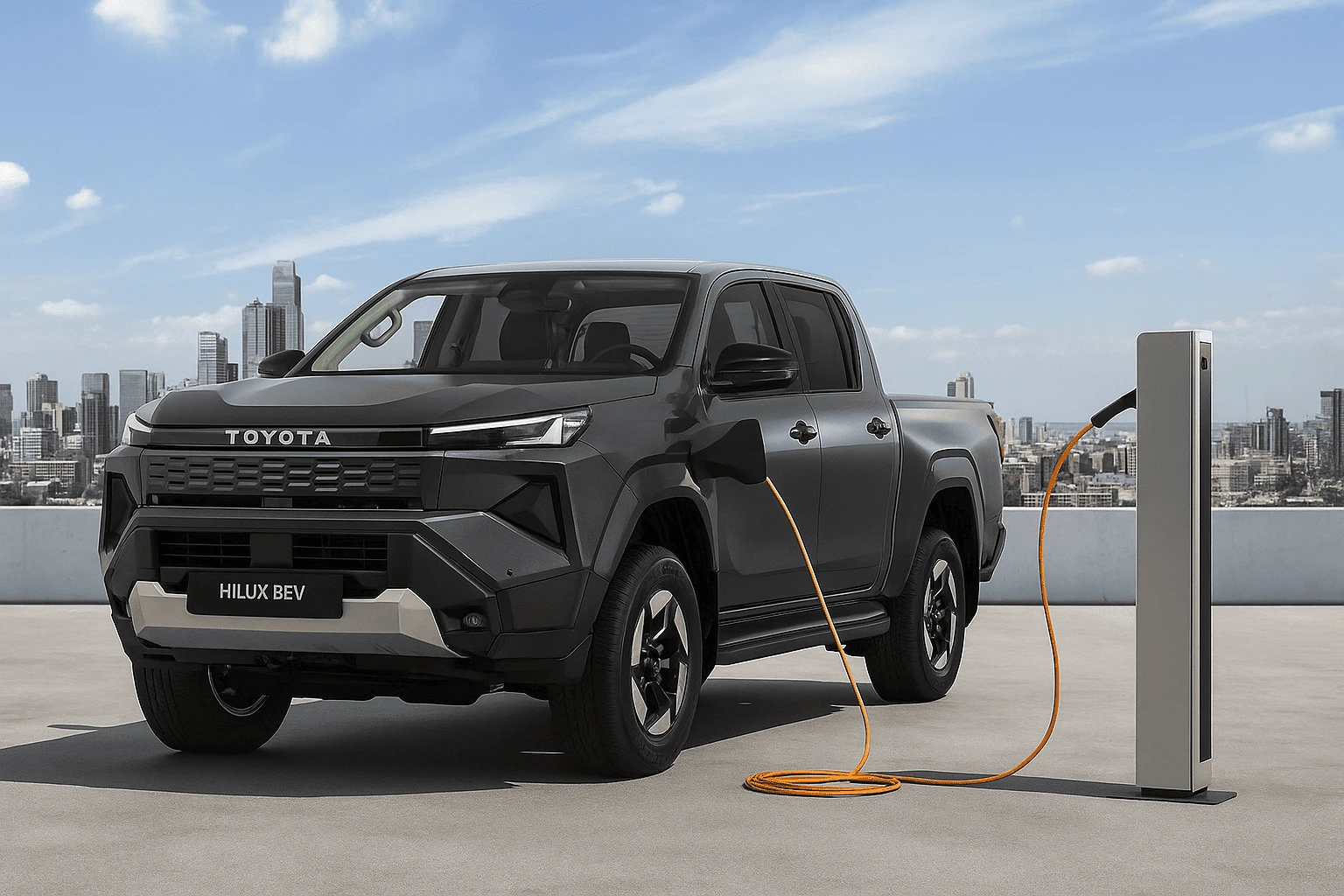
Toyota Just Shocked the Auto World — And It’s Headed to Pakistan Soon: For the first time, the Toyota Hilux is going electric. Yes, you read that right. The diesel-powered workhorse we’ve all known for years is finally going green. Scheduled for a global launch in December 2025, the Toyota Hilux EV marks a major shift in how the world — and particularly developing markets — think about electric vehicles (EVs). While EV sedans and SUVs have already found their way into Pakistani showrooms, the entry of an electric pickup truck is a whole new game.
This isn't just about changing engines. It's about changing mindsets. Toyota’s move shows just how serious the global car giant is about sustainable transportation, even in categories that were once considered "too tough" for EVs. It’s also a clear sign that the EV revolution isn’t just for luxury cars anymore — it’s coming for the workhorses too.
As we gear up for this historic launch, one big question remains: Is Pakistan ready for an electric Hilux? From pricing and infrastructure to customer trust and usage habits, there's a lot to unpack. But one thing is clear — this December 2025 launch could be the turning point that rewrites the rules of the road.
After months of rumors and anticipation, Toyota has officially confirmed that the first-ever electric Hilux will hit global markets in December 2025. This isn’t just a concept or a prototype anymore — production is on track, and the electric version of the world-famous pickup is coming to life.
Toyota has been relatively cautious in the EV race, focusing more on hybrids and hydrogen fuel cell tech in recent years. But with increasing pressure from global EV competitors and rapidly shifting consumer demand, the company is finally entering the pure-electric pickup space — and they’re doing it with their most trusted model.
This move also aligns with Toyota’s broader electrification strategy, which aims to offer more than 30 EV models by 2030. The Hilux EV will likely roll out in markets where the Hilux already dominates — think Southeast Asia, Africa, Australia, and yes, even Pakistan.
While Toyota hasn’t revealed every detail yet, early reports and leaks suggest some exciting specs. The Hilux EV could come equipped with a 59.2 kWh lithium-ion battery, offering an estimated range of around 240 km (roughly 150 miles) per charge — solid for a utility-focused EV.
Expect features like:
Regenerative braking
Instant torque for better off-road performance
Enhanced safety systems and digital dashboards
Multiple drive modes (eco, power, etc.)
There’s also speculation about a dual-motor AWD version for serious off-roaders — something that could really appeal to Pakistani drivers in northern or rural regions.
The Hilux isn’t just a best-seller — it’s a brand symbol. Choosing it as the first full EV pickup sends a clear message: Toyota is serious about making EVs for every kind of driver, not just city commuters.
With a massive global fan base, especially in regions like Pakistan, the Hilux EV could play a key role in building trust around electric mobility. It's not just an eco-friendly truck — it’s a statement that electric vehicles can be tough, reliable, and built for real-world use.
Pakistan's electric vehicle market is still in its early stages. While EV cars like the MG ZS EV and a few imported Tesla models are slowly gaining popularity, the charging infrastructure remains limited — especially outside major cities like Karachi, Lahore, and Islamabad.
The Hilux EV raises a big question: where will pickup owners charge their vehicles? Most Hilux drivers are not just city commuters. They're farmers, contractors, transporters — people who drive long distances and rely on rugged reliability. With the EV offering a 240 km range per charge (based on early reports), access to fast-charging stations will be critical for adoption in Pakistan.
Currently, Pakistan has fewer than 100 public EV charging stations nationwide. This could become a roadblock for mass adoption — unless private businesses, fuel stations, and the government act fast to expand infrastructure.
| Factor | Toyota Hilux Diesel | Toyota Hilux EV (Electric) |
|---|---|---|
| Fuel Cost | High and rising (diesel price fluctuations) | 60–70% lower running cost (electricity is cheaper) |
| Maintenance | Frequent oil changes, engine wear, and filters | Fewer moving parts, no oil changes, less frequent upkeep |
| Upfront Cost | Relatively more affordable | Expected to be higher due to import & battery costs |
| Incentives/Subsidies | Limited or none | Possible EV incentives (if government policies apply) |
| Availability | Readily available in Pakistan | Launching December 2025 — initial availability limited |
| Long-Term Savings | Moderate, depends on fuel economy | High, due to low fuel + low maintenance |
| Import Duties | Known structure & pricing | Higher unless CKD kits or local assembly introduced |
| Environmental Impact | High emissions | Zero tailpipe emissions |
The Hilux has built a cult following in Pakistan over the decades. It’s not just about specs — it's about reputation, ruggedness, and resale value. For many Pakistani buyers, especially in rural areas, trusting a new EV version might not come easily.
But younger buyers in urban areas, especially business owners and professionals, are more open to electric alternatives — if the performance lives up to the legacy. The key will be whether Toyota can convince buyers that the EV Hilux is not a compromise — it’s an upgrade.
The good news? Toyota already has brand trust. If any brand can shift Pakistani perception about EV pickups, it’s them.
Toyota’s decision to launch an electric version of the iconic Hilux marks a historic shift in the global automotive landscape — and it's a move that could significantly impact markets like Pakistan. With its deep-rooted trust among Pakistani buyers, the Hilux going electric isn’t just another new model — it’s a clear sign that even the toughest vehicles are going green.
We’ve seen early specs, launch timelines, and glimpses of what the Hilux EV might offer — from a 240 km range to powerful instant torque and upgraded digital features. It’s built for more than just the city; Toyota wants this pickup to perform in rough terrains and real-world conditions, just like its diesel sibling has for decades.
But for Pakistan, the road ahead comes with both promise and challenge. The EV infrastructure still needs massive investment. Charging accessibility, government policy, and high import duties could slow adoption — unless handled strategically. Yet, if fuel prices keep rising and EV support grows, the cost benefits of owning an electric Hilux could be too big to ignore.
For traditional buyers, switching to electric might feel risky — but change is inevitable. And this isn’t just about being eco-friendly. It’s about saving fuel, reducing maintenance, and preparing for the future of transportation in Pakistan.
So, should you wait for the Hilux EV or go with the current diesel version?
If you’re someone who values long-term savings, wants a quiet, powerful drive, and sees EVs as the future — then waiting for the December 2025 launch might just be worth it. For others who need proven, rugged reliability today, the diesel Hilux remains unbeatable.
But one thing’s for sure — Pakistan’s pickup scene is about to change forever.

I am Zeenat, an SEO Specialist and Content Writer specializing in on-page and off-page SEO to improve website visibility, user experience, and performance.
I optimize website content, meta elements, and site structure, and implement effective off-page SEO strategies, including link building and authority development. Through keyword research and performance analysis, I drive targeted organic traffic and improve search rankings.
I create high-quality, search-optimized content using data-driven, white-hat SEO practices, focused on delivering sustainable, long-term growth and improved online visibility.
Used hybrid cars are popular in Pakistan because they promise better fuel economy, smoother city dri
5 June 2026
In 2026, buying a car in Pakistan isn’t just about picking manual or automatic anymore. The re
21 February 2026
In recent years, Pakistan’s roads have quietly begun to tell a new story — one of a coun
20 January 2026
Be the first to share your thoughts
No comments yet. Be the first to comment!
Share your thoughts and join the discussion below.

.webp&w=3840&q=75)